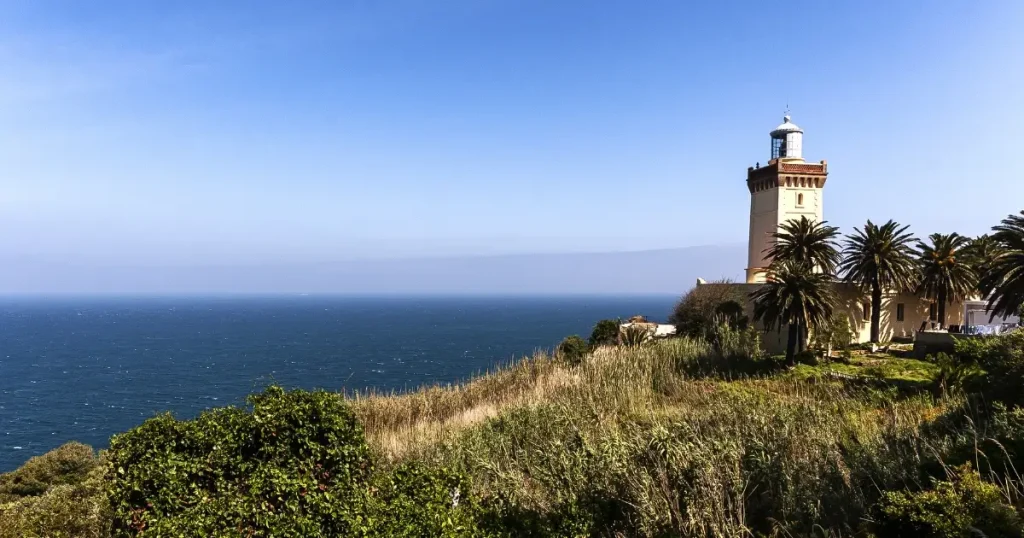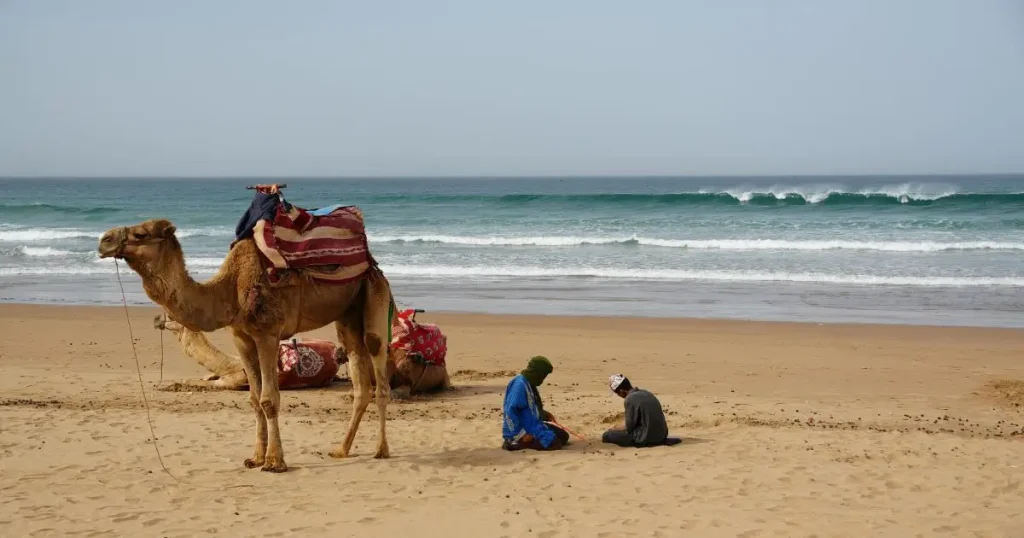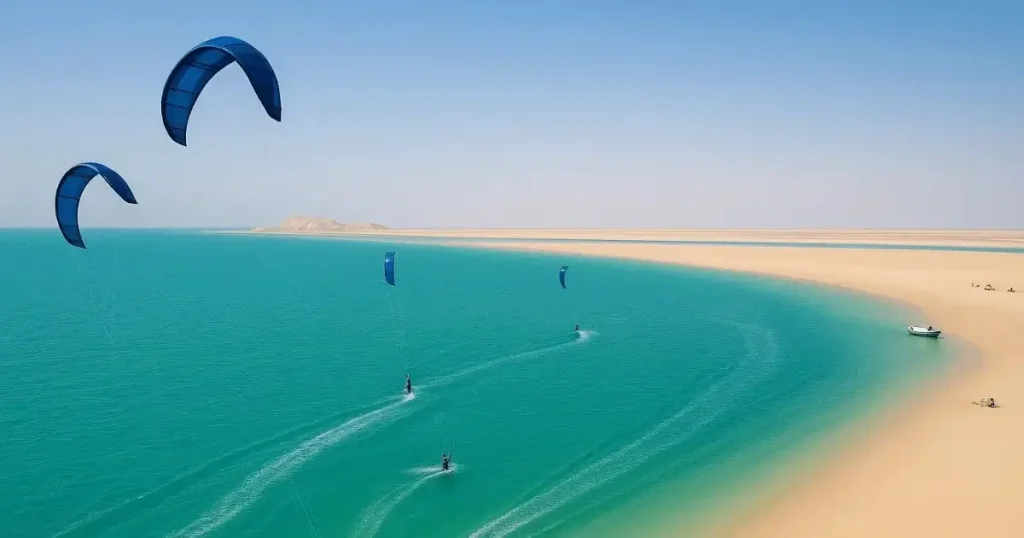
Travel to Ouarzazate Morocco and close your eyes for a moment. Imagine standing beneath a sky so vast and so impossibly blue that it feels like the earth itself is exhaling. Around you, ancient kasbahs of sun-baked clay rise like crowns against jagged mountain ridges. The air carries the faint scent of rose water and desert wind. Somewhere in the distance, a caravan trail disappears into golden dunes. This is what it feels like to travel to Ouarzazate Morocco — and once you arrive, no photograph, no film, and no travel article will ever fully do it justice.
Ouarzazate is one of those rare destinations that doesn’t simply impress you. It transforms you. Tucked between the High Atlas Mountains and the beginning of the great Sahara Desert, this city exists in a kind of suspended magic — ancient yet alive, remote yet surprisingly accessible, cinematic yet profoundly real. Whether you’re a history lover, an adventure seeker, a photography enthusiast, or simply someone searching for something extraordinary, Ouarzazate delivers with quiet, overwhelming confidence.
Where Is Ouarzazate Located?
Ouarzazate sits at an elevation of approximately 1,160 meters (3,806 feet) above sea level in southern Morocco, positioned at the crossroads of two great geographical worlds: the dramatic peaks of the High Atlas Mountains to the north, and the vast, golden expanse of the Sahara Desert stretching southward into the horizon. It is the capital of Drâa-Tafilalet region and serves as the administrative and cultural heart of southern Morocco.
The city is approximately 200 kilometers southeast of Marrakech, connected by the famous Tizi n’Tichka mountain pass — a winding, breathtaking road that itself becomes one of the most memorable parts of the journey. The name “Ouarzazate” is believed to derive from the Tamazight Berber language, loosely meaning “without noise” or “without confusion” — a name that perfectly captures the serene, almost otherworldly calm that pervades the region.
Why Ouarzazate Is Called the Gateway to the Sahara
Travel to Ouarzazate Morocco and you quickly understand why this city wears the title “Gateway to the Sahara” like a crown. Ouarzazate is the last major urban stop before the landscape dissolves entirely into the endless dunes and hammadas of the Sahara. From here, roads lead south toward Zagora and M’Hamid, and east toward Merzouga — the famous gateway to the iconic Erg Chebbi dunes.
But beyond geography, Ouarzazate is a gateway in a deeper, more spiritual sense. It is the threshold where Morocco’s urban energy quiets down, where the rhythm of life slows to the pace of the desert wind, and where the ancient Berber, Arab, and African cultures of the south begin to make themselves fully known. The kasbahs glow amber at sunset. The silence at night is so profound it feels sacred. Standing here, you feel yourself crossing not just a geographical border, but a border between the ordinary world and something far older and far more magnificent.
History and Cultural Importance of Ouarzazate
Ouarzazate’s history stretches back centuries, shaped by its strategic position along the great trans-Saharan trade routes that once connected sub-Saharan Africa with the Mediterranean world. Caravans carrying gold, salt, ivory, and spices passed through this region for millennia, leaving behind a rich mosaic of cultures, languages, and architectural traditions.
The indigenous Amazigh (Berber) people are the bedrock of Ouarzazate’s cultural identity. Their fingerprints are everywhere — in the intricate geometric patterns carved into kasbah walls, in the warm hospitality extended to travelers, in the Tamazight language still spoken in the valleys and villages surrounding the city. The arrival of Arab cultures, and later the influence of trans-Saharan African traditions, layered additional richness onto this already vibrant cultural canvas.
During the 20th century, Ouarzazate gained new prominence when the French established it as an administrative post, and later when the global film industry discovered its unparalleled landscapes. Today, the city is home to a unique blend of deep traditional heritage and unexpected international fame.
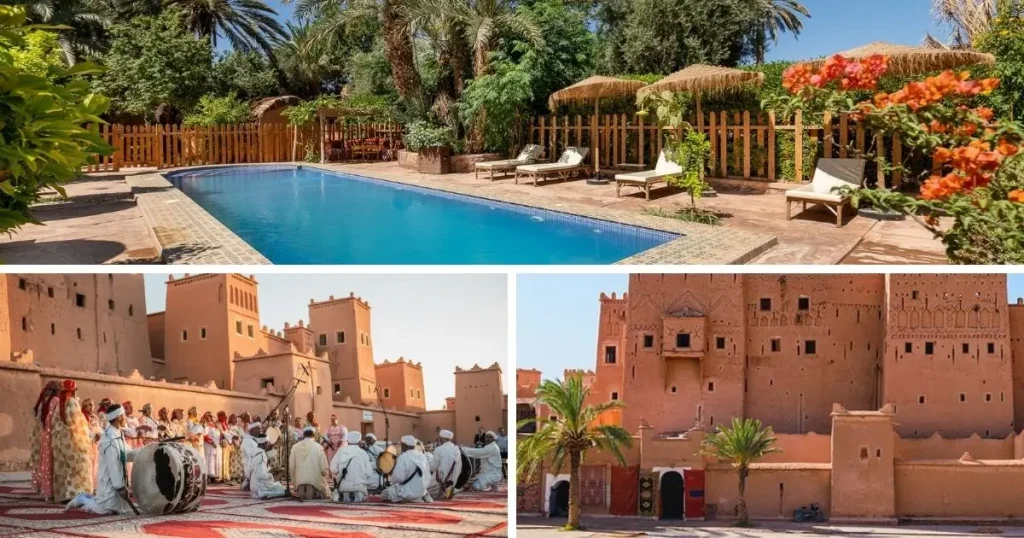
Ait Ben Haddou: The UNESCO World Heritage Jewel
No article about travel to Ouarzazate Morocco would be complete without extensive discussion of Ait Ben Haddou — arguably the single most spectacular site in all of southern Morocco, and one of the most visually stunning places on the entire African continent.
What Is Ait Ben Haddou?
Located approximately 32 kilometers northwest of Ouarzazate along the Ounila River valley, Ait Ben Haddou is a fortified village — a ksar — composed of earthen clay buildings that rise together in a dramatic, tiered formation against the surrounding desert landscape. The site has been recognized as a UNESCO World Heritage Site since 1987, acknowledged as an outstanding example of southern Moroccan earthen architecture.
Walking Through Living History
The entire ksar is a masterclass in pre-Saharan building tradition. The structures are built almost entirely from pisé — a mixture of clay, straw, and water — shaped into bricks and sun-dried over centuries. Towers rise four and five stories high, decorated with geometric Berber motifs that are both decorative and structurally symbolic. Some families still live within the old city walls, maintaining the ksar’s status not just as a museum piece, but as a living, breathing community.
Crossing the shallow river on stepping stones (or by donkey in the dry season), climbing the winding lanes to the granary at the summit, and looking back across the valley at the full panorama of the ksar at golden hour — this is one of those travel experiences that permanently rearranges something inside you.
Ait Ben Haddou on the Silver Screen
The ksar’s extraordinary visual drama has made it one of the most filmed locations in the world. Lawrence of Arabia, Gladiator, The Mummy, Prince of Persia, Babel, and countless other productions have used Ait Ben Haddou as a backdrop. The HBO series Game of Thrones filmed several scenes here, and the village stood in for the slave city of Yunkai. Walking its narrow lanes, you feel the weight of both real history and cinematic mythology pressing in from every direction.
Atlas Film Studios: Hollywood of Africa
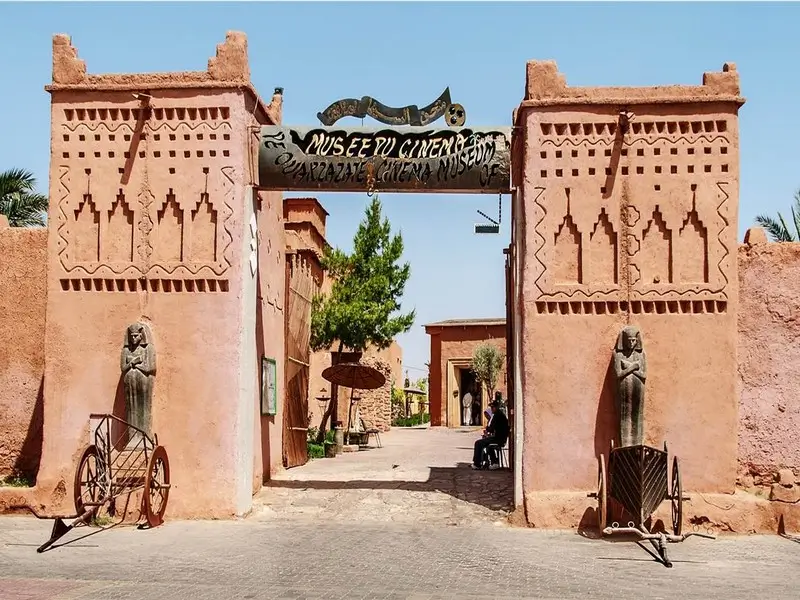
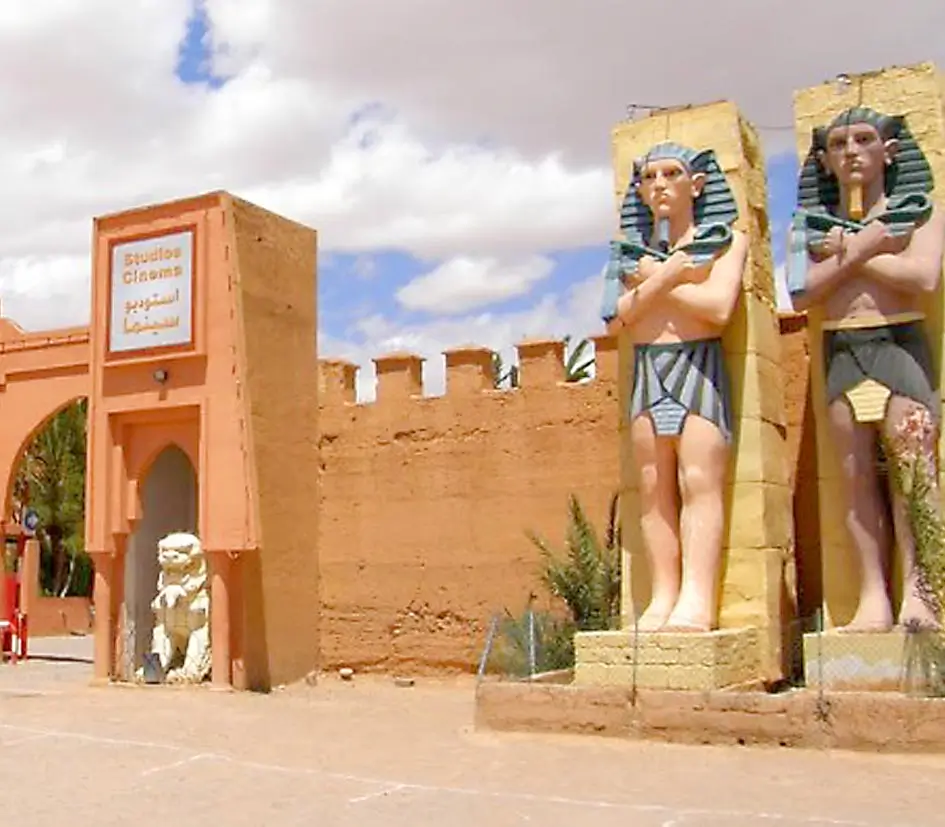
Just outside the city of Ouarzazate lies one of the most surreal and fascinating attractions in Morocco: Atlas Film Studios, often called the “Hollywood of Africa” and one of the largest film studios in the world by surface area.
A Living Museum of Movie Magic
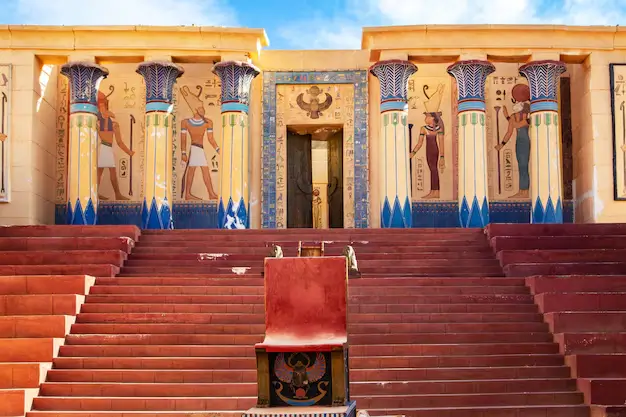
Established in 1983, Atlas Film Studios has hosted some of the most ambitious productions in cinema history. The studio’s backlot contains permanent sets that have been used in dozens of major films — Egyptian temples, Roman forums, Tibetan monasteries, and ancient Arabian city streets all coexist in the dry Moroccan air, weathered and peeling, but still impossibly atmospheric.
Visitors can tour the studios and walk through the sets of productions like Cleopatra, Kingdom of Heaven, The Living Daylights, Kundun, and Alexander. The experience is genuinely surreal — you’ll turn a corner and find yourself standing in what looks like ancient Alexandria, then turn another and face a medieval Islamic fortification, all within a stone’s throw of the real Saharan landscape stretching to the horizon behind it.
For film enthusiasts, travel to Ouarzazate Morocco and a visit to Atlas Film Studios is nothing short of a pilgrimage. The studio also offers insight into Morocco’s thriving film industry and the significant economic role that international productions have played in the region.
Taourirt Kasbah: The Heart of the City
In the center of Ouarzazate itself stands the Taourirt Kasbah, one of the most important kasbahs in Morocco and a stunning example of the earthen architecture that defines this entire region.
Architecture and History
Originally built by the powerful Glaoui family — the Pashas of Marrakech who dominated southern Morocco during the early 20th century — Taourirt Kasbah is an enormous complex of towers, courtyards, and residential quarters that once housed hundreds of people. The kasbah’s facade is a masterwork of decorative earthen construction, its towers rising against the sky in a deeply satisfying visual rhythm.
Parts of the kasbah are open to the public, allowing visitors to wander through rooms decorated with original tile work, carved plaster, and painted cedarwood ceilings. The UNESCO has supported restoration efforts here, and the ongoing work makes the site not just a historical monument, but an active conversation between past and present.
Wandering through Taourirt at dusk, when the low sun turns the clay walls a deep, burnished orange, is one of those quiet, personal moments that travelers from the USA, UK, Canada, and Europe consistently cite as among the most memorable experiences of their entire journey to Morocco.
The Skoura Oasis: A Garden in the Desert
About 42 kilometers east of Ouarzazate, the Skoura Oasis emerges from the desert like a dream — a dense, lush palmery stretching for kilometers across an otherwise dry and rocky landscape. The sight of it from the road, especially after hours of driving through open desert terrain, triggers something close to disbelief.
The palmery is home to an estimated 300,000 palm trees, along with almond, olive, and argan trees, and a series of ancient kasbahs half-hidden within the green. The most famous of these is Amridil Kasbah, one of the best-preserved kasbahs in Morocco, which even appeared on the old 50-dirham banknote.
Exploring Skoura on foot or by bicycle, weaving through the shaded lanes beneath the palms, stopping at small farms, and visiting the kasbahs scattered through the greenery is one of the most peaceful and deeply rewarding experiences available to those who travel to Ouarzazate Morocco and venture a little further along the road of discovery.
Sahara Desert Tours from Ouarzazate
Ouarzazate’s position as the Gateway to the Sahara makes it the ideal launching point for some of the most spectacular desert experiences available anywhere on Earth.
Merzouga and Erg Chebbi Dunes
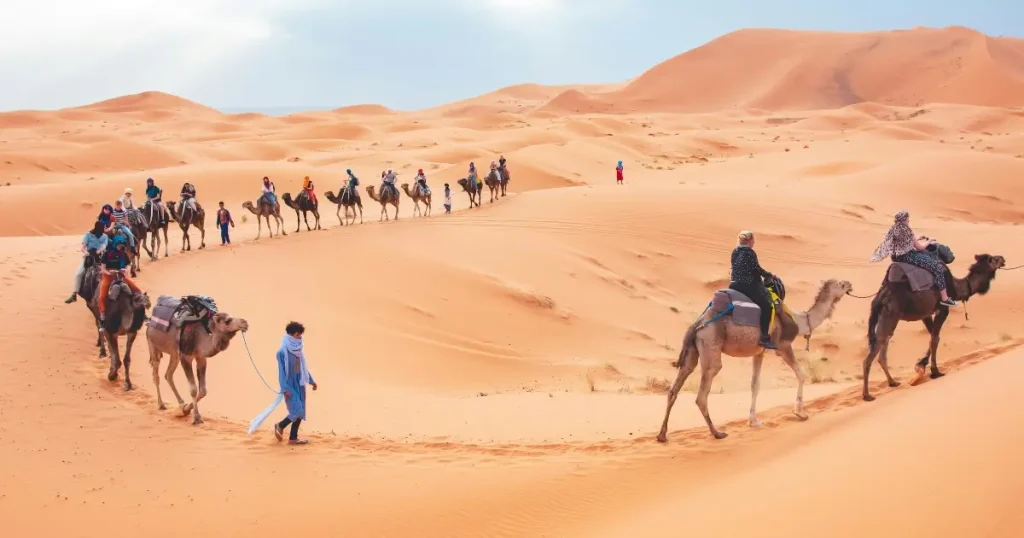
The journey from Ouarzazate eastward through the Draa Valley and on to Merzouga — home to the magnificent Erg Chebbi dune field — is one of the great road trips of North Africa. The dunes of Erg Chebbi rise up to 150 meters and glow in extraordinary shades of orange, red, and gold depending on the time of day. Camel treks into the dunes, overnight stays in luxury desert camps under skies blazing with stars, and waking to a Saharan sunrise are experiences that no traveler ever forgets.
Zagora and the Draa Valley
Heading south from Ouarzazate, the Draa Valley unfolds in a long, sinuous ribbon of green palmeries and ancient villages threading between barren, dramatic rock formations. Zagora, further south, was once an important point on the ancient caravan routes, and a famous sign there once read: “Timbuktu — 52 days by camel.” The desert camp experiences available around Zagora are often more intimate and less crowded than those further east, making it a wonderful choice for travelers seeking a quieter, more personal encounter with the Sahara.
Best Things to Do in Ouarzazate
Travel to Ouarzazate Morocco opens up an extraordinary range of experiences. Beyond the major sites, the city and its surroundings offer hiking in the Anti-Atlas foothills, rose festival celebrations in the nearby Vallée des Roses (typically in April), visits to traditional Berber villages, quad biking and 4×4 desert excursions, exploring local souks for handmade pottery and silver jewelry, and experiencing traditional Moroccan hospitality through a stay in a beautifully restored riad or kasbah hotel.
Best Time to Visit Ouarzazate
The best time to travel to Ouarzazate Morocco is during spring (March to May) and autumn (September to November). During these seasons, temperatures are warm and pleasant — typically between 20°C and 30°C (68°F to 86°F) — the desert light is extraordinary, and the landscapes are at their most photogenic.
Summer (June to August) brings intense heat, with temperatures regularly exceeding 40°C (104°F), which makes outdoor exploration genuinely challenging. Winter (December to February) is cool to cold, particularly at night, but offers dramatically clear skies, thinner crowds, and the unique experience of seeing snow on the Atlas peaks framing the desert below — a sight of extraordinary visual contrast and beauty.
Weather and Climate
Ouarzazate has a hot semi-arid climate with strong desert influences. Annual rainfall is minimal — typically around 100-150mm per year — and sunshine is abundant throughout the year. The summer heat is dry rather than humid, which makes it more bearable than tropical heat but still demanding. The shoulder seasons offer the most comfortable conditions for sightseeing, photography, and desert excursions.
How to Get to Ouarzazate from Marrakech
The most popular and most spectacular route to Ouarzazate from Marrakech is the mountain road via the Tizi n’Tichka pass — a 200-kilometer journey that takes approximately 3 to 4 hours by car or shared taxi (grand taxi). The road climbs to an altitude of over 2,260 meters before descending through switchbacks into the southern landscape. Every kilometer of this drive is visually extraordinary.
Ouarzazate also has its own airport, Ouarzazate Airport (OZZ), with regular flights from Casablanca and seasonal connections from several European cities. For travelers who wish to maximize their time in the south, flying in and driving back through the mountains (or vice versa) is a wonderful option.
Why Tourists Love Ouarzazate
Travelers from the USA, UK, Canada, and Europe return from Ouarzazate with a specific kind of quiet rapture in their eyes. The city offers something increasingly rare in modern travel: genuine authenticity. The kasbahs are not reconstructions. The desert is not a theme park. The Berber culture is not a performance. Everything here is real, immediate, and deeply human.
The slower pace, the extraordinary visual environment, the warmth of local hospitality, the feeling of standing in a landscape that feels both ancient and somehow timeless — these are the qualities that make Ouarzazate one of those destinations that travelers speak about for decades after they’ve returned home.
Best Photography Spots in Ouarzazate
For photographers, travel to Ouarzazate Morocco is close to paradise. The golden hour light on Ait Ben Haddou, the shadow play on Taourirt Kasbah’s towers, the palm-framed kasbahs of Skoura, the surreal backlots of Atlas Film Studios, the vast mineral landscapes along the road to Merzouga — each location offers images that feel simultaneously exotic and elemental.
Dawn and dusk are the magic hours. The warm, directional light of morning and evening transforms the earthen architecture into something that glows from within. For landscape and architectural photography enthusiasts, the Ouarzazate region may be the single most rewarding destination in all of North Africa.
Safety and Travel Tips for Ouarzazate
Ouarzazate is considered one of the safest cities in Morocco for international tourists. Violent crime is rare, and the local population is accustomed to and genuinely welcoming of foreign visitors. As with any travel destination, a few practical considerations will help ensure your experience is smooth and memorable.
Dress respectfully, particularly when visiting religious sites and traditional villages — lightweight, breathable clothing that covers shoulders and knees is appropriate and practical given the sun intensity. Bargain good-naturedly in souks and markets, as haggling is culturally expected and part of the social fabric of the marketplace. Drink bottled water. Hire a local guide for Ait Ben Haddou and the surrounding kasbahs — the depth of historical and cultural context they provide transforms a pleasant visit into a genuinely revelatory one. Book desert camp experiences in advance during peak season, as the best camps fill quickly. And carry cash, as ATMs become less available the further south you venture.
Frequently Asked Questions About Travel to Ouarzazate Morocco
1. Is Ouarzazate worth visiting? Absolutely. Ouarzazate is one of the most spectacular and culturally rich destinations in North Africa. Between Ait Ben Haddou, the Atlas Film Studios, the surrounding desert landscape, and the authentic Berber culture, it offers an extraordinary depth of experience that far exceeds the expectations of most first-time visitors.
2. How many days should I spend in Ouarzazate? A minimum of two full days allows you to visit the main sites — Ait Ben Haddou, Taourirt Kasbah, and Atlas Film Studios. Three to four days gives you time to add a trip to Skoura Oasis and a short desert excursion. For those wishing to include a proper Sahara experience at Merzouga or Zagora, plan for five to seven days in the broader region.
3. Is it safe to travel to Ouarzazate Morocco as a solo traveler? Yes. Ouarzazate is widely regarded as very safe for solo travelers, including women traveling alone. Standard travel awareness and respectful behavior are sufficient precautions for the vast majority of visitors.
4. What currency is used in Ouarzazate? Morocco’s currency is the Moroccan Dirham (MAD). It is non-convertible outside Morocco, so exchange money upon arrival. ATMs are available in Ouarzazate city center, though less so in more remote areas.
5. What language is spoken in Ouarzazate? The primary languages are Tamazight (Berber), Darija (Moroccan Arabic), and French. English is spoken at many hotels and tourist sites, though learning a few words of French or basic Arabic phrases is warmly appreciated by locals.
6. Can I visit Ouarzazate as a day trip from Marrakech? Technically possible but not recommended. The drive through Tizi n’Tichka takes 3-4 hours each way, leaving very little time for meaningful exploration. At least one overnight stay — ideally more — is strongly advised to do justice to the destination.
7. What is the food like in Ouarzazate? The food is magnificent. Southern Moroccan cuisine features slow-cooked tagines of lamb, prunes, and almonds; couscous with caramelized vegetables; harira soup; freshly baked bread; and an extraordinary variety of dates from the desert oases. The food is rich, aromatic, and deeply satisfying after a day of exploring.
Conclusion: Answer the Call of the Desert
There are destinations that you visit, and there are destinations that visit you — that take up residence somewhere deep inside and never quite leave. Travel to Ouarzazate Morocco belongs firmly, magnificently in the second category.
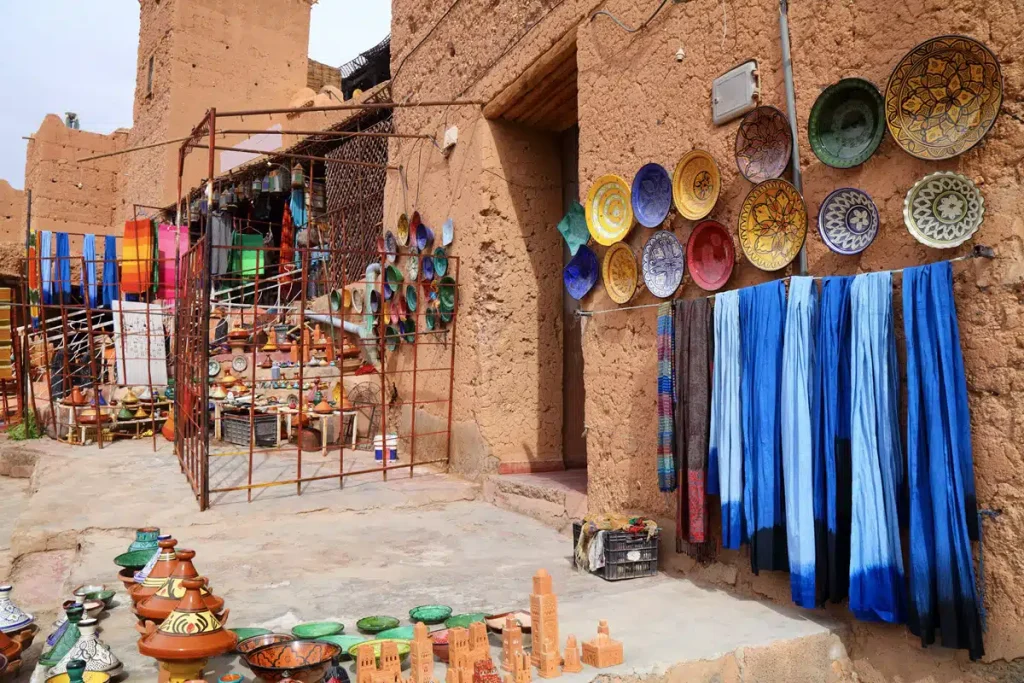
From the moment the High Atlas mountains open up and the southern plateau spreads before you — tawny and vast and impossibly beautiful — something shifts. The noise of modern life grows quieter. The ancient world grows louder. Standing at the base of Ait Ben Haddou’s towers at golden hour, or waking in a desert camp to find the Milky Way still burning overhead, or simply sitting on a rooftop terrace in the city as the call to prayer echoes across the kasbahs and the desert wind stirs the palm fronds below — these are the moments that make a life richer, a spirit more open, and a heart more fully alive.
Ouarzazate is not just a city to visit. It is a threshold to cross. And on the other side of that threshold lies something the modern world rarely offers in such abundance: genuine wonder, genuine stillness, and the profound, humbling beauty of a landscape and a culture that have been here for thousands of years — waiting, patiently, for you to arrive.
Book the flight. Drive the mountain road. Walk the ancient lanes. Let the desert do what deserts have always done to those brave enough to seek them out. You will not return the same person you were when you left.