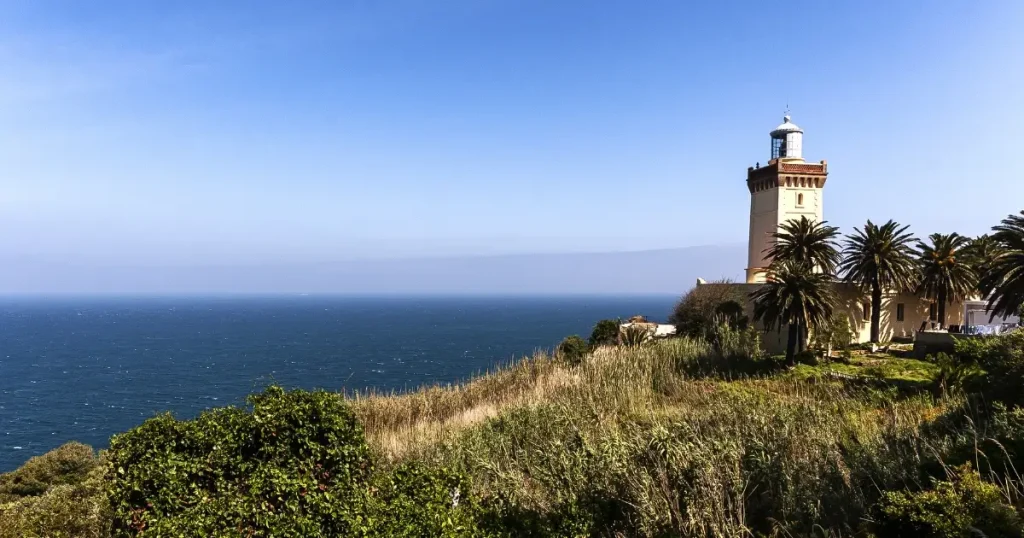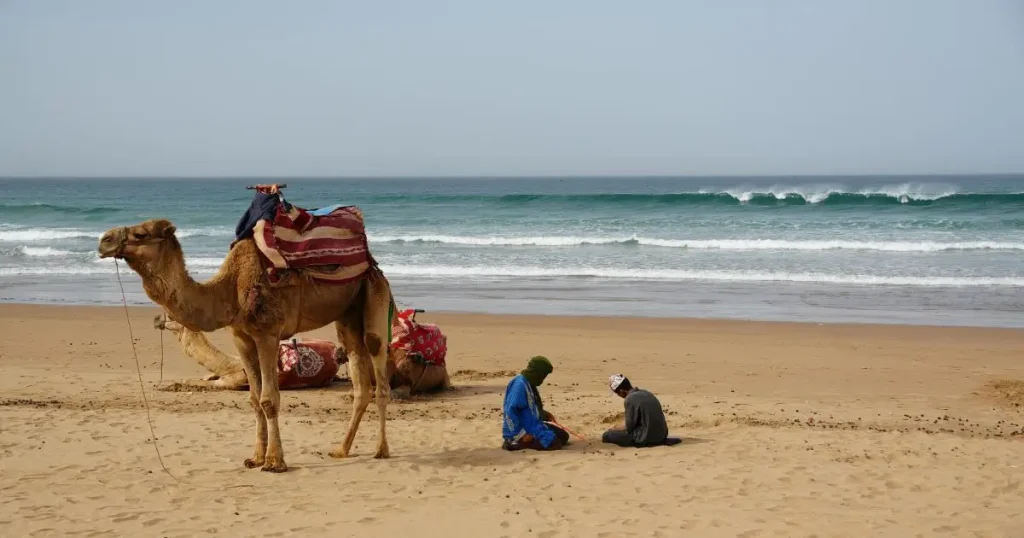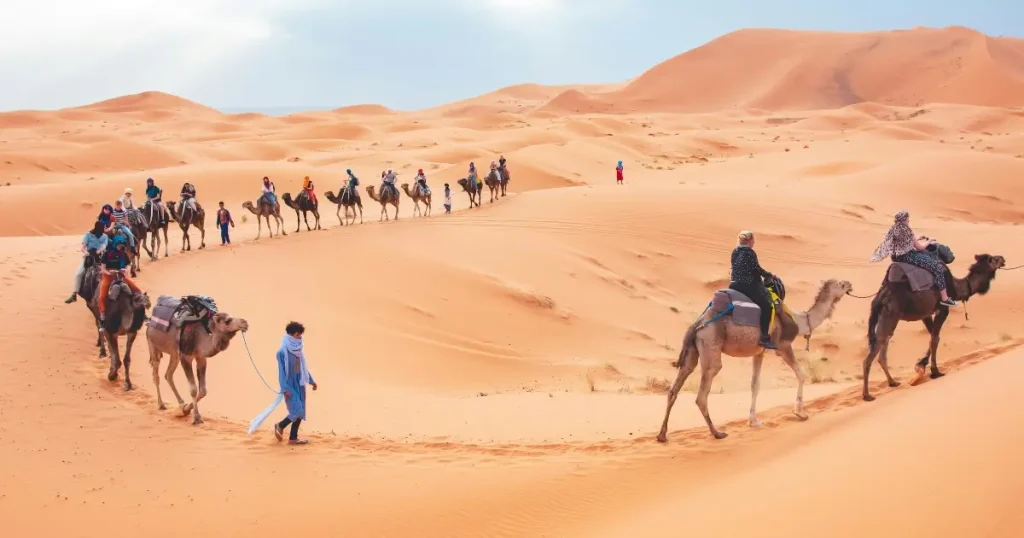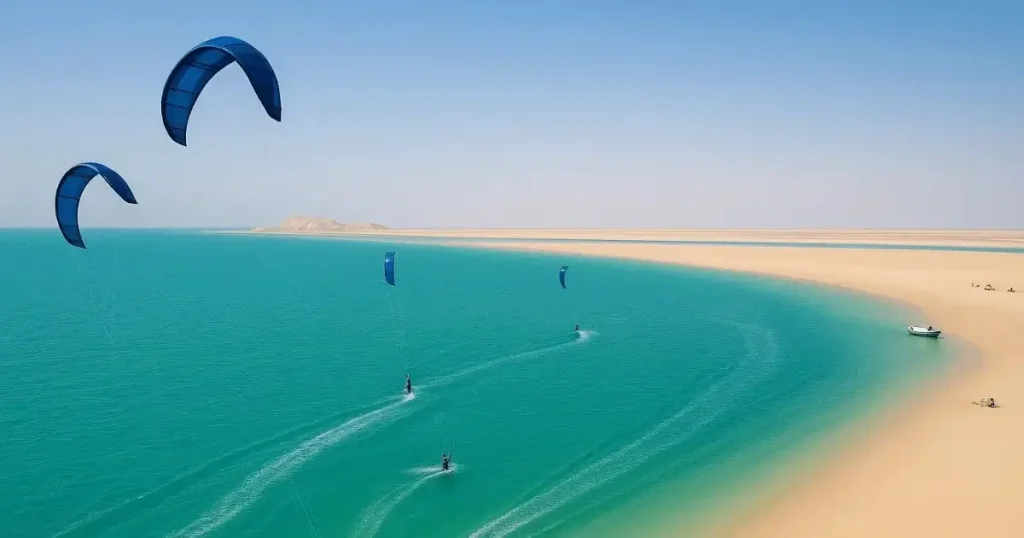
Imagine standing barefoot on a golden shoreline as the Atlantic Ocean rolls in silver and turquoise beneath an impossibly blue sky. The smell of charcoal-grilled fish drifts from a café terrace, fishermen haul their blue-painted boats above the tideline, and somewhere up a whitewashed alley, a surfer laughs as they retell the morning’s best wave. This is Taghazout — a small Moroccan village with an outsized hold on the hearts of every traveler who finds their way here. If you have ever dreamed of a place where world-class surf, ancient Berber culture, rooftop yoga at sunrise, and the unhurried warmth of North African hospitality all exist on the same narrow coastline, then travel to Taghazout Morocco belongs at the very top of your bucket list.
Why Taghazout Morocco Is Having Its Moment Right Now
For decades, Taghazout was a whispered secret passed between surfers, backpackers, and free spirits who discovered Morocco’s Atlantic coast and quietly decided to stay. That era of quiet obscurity is ending, but not in the way that usually ruins beautiful places. Taghazout is growing thoughtfully, with boutique hotels, rooftop yoga studios, artisan markets, and eco-conscious resorts expanding around a village that still wakes each morning to the sound of fishing boats heading out to sea.
National Geographic called it one of the most compelling coastal destinations in North Africa. Luxury brands including Fairmont, Hilton, and Hyatt have built flagship properties along the bay. Yet walk ten minutes into the village center, and you will still find a grandmother selling argan oil on the pavement, cats sunbathing on blue stairways, and a café with plastic chairs where a bowl of harira soup costs almost nothing. This rare quality — the coexistence of authentic village life with rising world-class amenities — is precisely what makes travel to Taghazout Morocco so compelling right now. Visit before the balance tips further, and you will experience something genuinely rare: a destination in its most luminous moment.
A Brief History and Cultural Significance
Taghazout is a Berber village at its core, and understanding that heritage transforms how you see every detail of the place. The Amazigh (Berber) people have inhabited this stretch of the Souss-Massa coast for thousands of years, living by the rhythms of the Atlantic and the agricultural seasons of the surrounding plain. The village’s name itself is believed to derive from the Tachelhit Berber language, and Tachelhit remains the everyday tongue of most locals, spoken alongside Moroccan Arabic and, increasingly, French and English.
For much of the 20th century, Taghazout remained a modest fishing community. Its defining modern transformation began in the 1960s and early 1970s, when the first surf travelers — mostly European and American wanderers following the Hippie Trail — discovered that Morocco’s Atlantic coast produced waves of genuinely world-class quality. Word spread through the global surfing community slowly but steadily, and Taghazout’s identity began its permanent evolution. The village became a pilgrimage site for surfers who would pitch tents, rent rooms in family homes, and stay for entire winters chasing swells.
Today, Taghazout carries all of those layers simultaneously: the ancient Berber fishing village, the hippie surf haven of the 1970s, and the emerging luxury coastal resort destination of the 2020s. The result is a destination with more cultural texture than almost any beach town on earth.
Top Attractions and Must-See Landmarks
Anchor Point
If Taghazout has a single defining landmark, it is Anchor Point — a legendary right-hand point break widely considered one of the finest surf waves in the world. Located on a rocky promontory at the northern edge of the village, Anchor Point produces long, powerful, barreling waves that have drawn professional surfers from every continent. Even if you never touch a surfboard, the walk out to the point at sunset is one of the great free experiences available anywhere on Morocco’s coast, with panoramic views of the Atlantic stretching toward the horizon.
Taghazout Beach and the Fishing Harbor
The heart of village life is the small bay immediately in front of the village, where traditional wooden fishing boats painted in brilliant blues and whites are hauled up onto the sand each afternoon. In the early morning, fishermen sort their catches directly on the beach, selling the freshest fish imaginable to local restaurants and villagers. Sitting at one of the simple beachfront cafés with a pot of mint tea while watching this daily ritual is an experience that distills Morocco’s coastal character beautifully.
Panorama Beach
A five-minute walk south of the village, Panorama Beach is a vast, sweeping arc of golden sand that seems to extend indefinitely toward Tamraght. A paved boardwalk follows the full length of the beach, making it ideal for walking, cycling, and early morning runs. The waves here attract intermediate and advanced surfers, and the beach is lined with surf schools, shack cafés, and rental outfitters. At sunset, Panorama Beach is one of the most photographically spectacular places in all of southern Morocco.
Banana Beach and Devil’s Rock
Banana Beach, just north of Anchor Point, is a gentler, more sheltered strip of sand beloved by beginner surfers and families. The consistent, rolling waves and shallower water make it the ideal place to take a first surf lesson. Devil’s Rock, a dramatic volcanic formation rising from the sea nearby, is a popular landmark for photographs and adds a sense of wild geological drama to the otherwise serene coastline.
Bab Taghazout Artisan Market
For those drawn to Morocco’s legendary craft traditions, the Bab Taghazout market offers a curated selection of handmade ceramics, woven Berber rugs, carved argan wood objects, jewelry, and leather goods. Unlike the more pressured commercial markets of Marrakech’s medina, Bab Taghazout has a relaxed atmosphere where browsing is genuinely pleasurable and conversations with artisans are a natural part of the experience.
Targant — Musée de l’Arganier
The Argan Museum near Taghazout Bay offers a fascinating insight into Morocco’s most celebrated indigenous resource: the argan tree. Endemic to the Souss-Massa region, argan trees produce the oil prized globally for culinary and cosmetic uses. The museum walks visitors through the ecology, history, and traditional production methods of argan oil, and the attached shop sells certified, fair-trade argan products directly from local cooperatives.
Unique Experiences Travelers Cannot Miss
Surfing at Every Level
Travel to Taghazout Morocco and surfing becomes inseparable. The area around the village offers more than a dozen distinct surf breaks catering to every skill level, from the gentle, forgiving waves at Banana Beach and Panorama — perfect for absolute beginners — to the challenging barrels of Anchor Point and the technical reef breaks scattered up and down the coast. Dozens of reputable surf schools and camps operate year-round, offering lessons, board rentals, guiding, and week-long immersive surf retreats. Even travelers with no intention of surfing find the culture infectious.
Rooftop Yoga at Sunrise
Taghazout has evolved into one of Morocco’s leading wellness destinations, and yoga culture here is woven into the fabric of daily life rather than being a tourist afterthought. Several dedicated yoga studios, surf-and-yoga retreat centers, and rooftop spaces offer daily classes overlooking the ocean. Sunrise yoga sessions with Atlantic views are among the most transcendent experiences available in Morocco, blending physical practice with one of North Africa’s most dramatic natural backdrops.
Paradise Valley Day Trip
Forty minutes inland from Taghazout, hidden within the foothills of the Anti-Atlas Mountains, Paradise Valley is a series of emerald-green natural pools carved into ancient rock by a seasonal river. The canyon’s palm trees, oleander bushes, and sheer limestone walls create an almost mythically beautiful landscape that feels worlds away from the ocean coast. Swimming in the natural pools on a warm afternoon, surrounded by Moroccan families sharing picnics and children leaping from the rocks, is one of those experiences that travelers carry with them for the rest of their lives.
Traditional Hammam
The hammam — Morocco’s traditional communal steam bath — is one of the country’s most intimate cultural rituals. The Tamraght Spa House near Taghazout offers a welcoming environment for visitors to experience a full hammam ceremony, which typically involves a steam session, an invigorating black soap (beldi) scrub using a kessa mitt, and a relaxing massage with argan oil. Luxury spa facilities at the Fairmont Taghazout Bay offer the same experience elevated to international spa standards, including a signature Berber Ceremonial Hammam using indigenous plants from across the Souss region.
Watching the Sunset at Anchor Point
Every evening, a pilgrimage of sorts takes place in Taghazout as locals, surfers, and travelers make their way to Anchor Point to watch the sun descend into the Atlantic. The rocky promontory frames the horizon perfectly, and the quality of light on Morocco’s Atlantic coast — that warm, deep amber that pools in the crests of the waves — makes this one of the most beautiful sunsets in the Mediterranean and North African world.
Local Food and Traditional Cuisine
Eating in Taghazout is one of the great pleasures of the experience, whether you are sitting at a beachfront shack with plastic chairs or dining at a rooftop restaurant with panoramic ocean views.
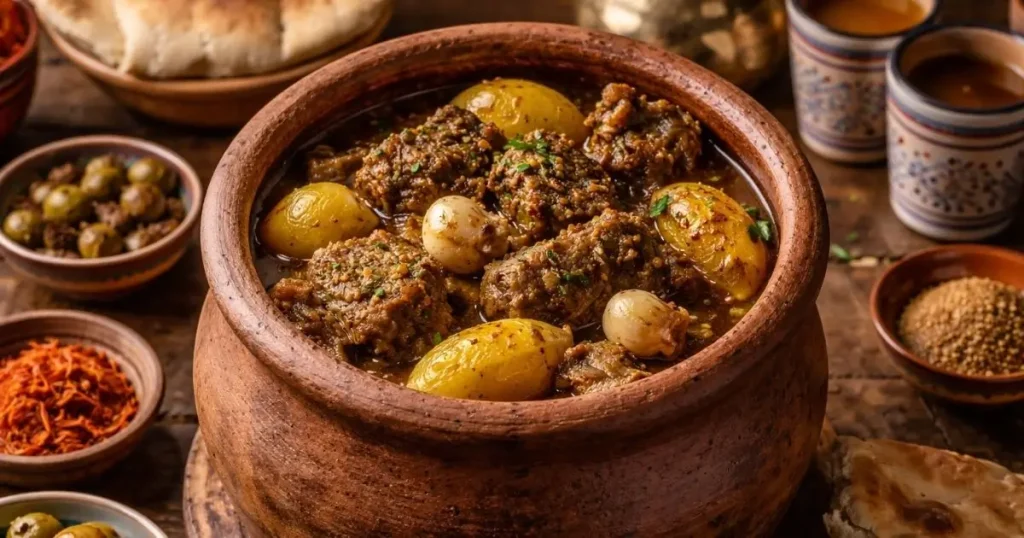
The definitive dish is the tagine — Morocco’s signature slow-cooked stew prepared in a conical clay pot. In Taghazout, fish and seafood tagines reign supreme, typically featuring the morning’s catch with preserved lemons, olives, tomatoes, herbs, and warming spices. Surf Berbère is consistently recommended as serving the best tagine in the village, and the modest setting amplifies rather than diminishes the quality of the cooking.
For breakfast, the Moroccan spread is a joyful ritual: rounds of warm khobz bread, olive oil, honey, amlou (a rich paste of ground almonds, argan oil, and honey that is unique to the Souss region and deeply addictive), soft cheese, and always, always, mint tea poured from a height to build that signature foam. The Red Clay Café has become Taghazout’s most celebrated spot for creative, plant-based Moroccan food — their Moroccan-style burritos, freshly baked cinnamon buns, and excellent espresso drinks have won devotees from across the surfing world.
Café Tayoughte, a tiny hole-in-the-wall directly on the beach, serves some of the most authentic food in town, including the best sunset tagines in Taghazout. On Fridays, keep an eye out for couscous at traditional local restaurants — the weekly communal dish is a profoundly important cultural institution in Moroccan life, and sharing it with locals is one of the most meaningful food experiences available to any traveler in the country.
For those seeking lighter fare, smoothie bowls, fresh juice bars, and international café menus have proliferated throughout the village, reflecting Taghazout’s growing appeal among health-conscious surf travelers and wellness tourists.
Best Time to Visit Taghazout Morocco
One of Taghazout’s greatest strengths as a destination is its year-round appeal, owing to an exceptionally mild Atlantic climate moderated by the cooling influence of the Canary Current.
October to April is widely considered the prime period for travel to Taghazout Morocco, particularly for surfers. Autumn and winter swells produce the largest, most consistent waves, drawing professional and advanced surfers from around the world. Temperatures during this period are pleasant rather than hot — typically ranging between 18°C and 24°C (64°F–75°F) — and the village has a relaxed, unhurried atmosphere. October and November are particularly magical months, balancing great surf with comfortable temperatures and significantly fewer crowds than summer.
May to September brings warmer temperatures, more reliable sunshine, calmer seas (making it ideal for families and swimming), and significantly larger crowds, particularly from European visitors on summer holiday. August in particular can see traffic from Agadir to Taghazout extend journey times considerably. The Atlantic breeze keeps Taghazout notably cooler than inland Moroccan cities even in midsummer, with temperatures rarely exceeding 28°C (82°F), making it an attractive summer beach destination by any standard.
For the ideal balance of surf quality, comfortable weather, manageable crowds, and authentic village atmosphere, October, November, February, and March are the standout months.
Travel Tips and Safety Information
Taghazout is widely regarded as one of the safest tourist destinations in Morocco, and the country overall ranks among the safer travel destinations in North Africa and the broader Mediterranean region. Local authorities maintain a visible presence in the village, and the genuinely warm, welcoming character of Taghazout’s residents contributes significantly to an atmosphere where visitors feel comfortable and at ease.
Water: Drink bottled water throughout your stay. Tap water in Morocco is treated, but travelers’ digestive systems often react to the different bacterial environment, and the risk is easily mitigated by sticking to bottled or filtered water.
Stray animals: Morocco has a significant stray cat and dog population. While cats are generally harmless and add to Taghazout’s bohemian charm, avoid contact with stray dogs and seek immediate medical advice if bitten or scratched, given advice about rabies risk from health authorities.
Currency: Morocco’s currency is the Dirham (MAD), a closed currency that cannot be imported or exported in significant quantities. Exchange currency at the airport or at banks in Agadir. Cash remains king throughout Taghazout, though card acceptance is growing in hotels and larger restaurants. Some establishments accept Euros as a fallback.
Dress code: Taghazout is relatively liberal by Moroccan standards due to its surf culture and international visitor base, but respectful dress outside beach areas is appreciated. Covering shoulders and knees when walking through the village market or visiting residential areas shows cultural sensitivity and will be warmly received.
Alcohol: Morocco is a predominantly Muslim country. Alcohol is available in licensed hotels, bars, and a small number of restaurants in Taghazout (including World of Waves and Amouage), but it is not sold in local shops and should not be consumed on the street.
Connectivity: Mobile internet is broadly available through Moroccan SIM cards (Maroc Telecom and Orange are the main providers). WiFi quality varies considerably between accommodation options; dedicated surf camps and coworking spaces like SunDesk offer the most reliable connections for digital nomads.
Transportation and How to Reach Taghazout
By Air
The closest airport is Al Massira Airport (AGA) in Agadir, located approximately 40 minutes south of Taghazout by road. Agadir has surprisingly good international flight connections, with low-cost carriers including Ryanair and easyJet operating routes from numerous European cities. From Edinburgh, London, Paris, Amsterdam, and many other European hubs, flights to Agadir are frequently available at very competitive prices.
From Agadir Airport to Taghazout
Several transfer options connect the airport to Taghazout. Private taxis are available outside the arrivals terminal; negotiate the fare before departure and expect to pay approximately 200–350 MAD (roughly €18–32). Pre-arranged transfers booked through your accommodation or online in advance are recommended for ease. The Souk to Surf shuttle service is a popular, affordable option specifically designed for travelers heading to Taghazout and nearby surf towns.
From Marrakech
Taghazout is approximately 275 kilometers southwest of Marrakech, typically a three-hour drive along the N1/N8 highway. Private taxis, shared taxis (grand taxis), and private transfer services make this journey regularly. CTM and Supratours coaches do not serve Taghazout directly, making Agadir the preferred transit hub for most international arrivals.
Getting Around Taghazout
The village itself is extremely compact and best explored entirely on foot. Bicycles are available to rent for exploring the coast road toward Tamraght and the wider Taghazout Bay development. Taxis from Agadir are the primary connection to the wider region for day trips.
Nearby Destinations Worth Exploring
Agadir (19 km south): Morocco’s premier beach resort city offers a complete contrast to Taghazout — wide promenades, a reconstructed medina (the original was destroyed by earthquake in 1960), Souk El Had (one of the largest traditional markets in Morocco), and a broader range of dining, entertainment, and shopping options.
Tamraght (5 km south): Taghazout’s quieter sister village is loved by travelers seeking an even more relaxed pace. It shares a similar surf culture and village charm, with a growing cluster of cafés, guesthouses, and yoga studios.
Imsouane (70 km north): This remote fishing village is home to one of Morocco’s most celebrated waves — a long, gentle right-hand point break beloved by beginners and longboarders. The journey north along the coast road passes through dramatic Atlantic scenery.
Paradise Valley (40 km inland): As described above, an essential day trip for any visitor to the region — natural rock pools, palm canyons, and one of Morocco’s most quietly spectacular landscapes.
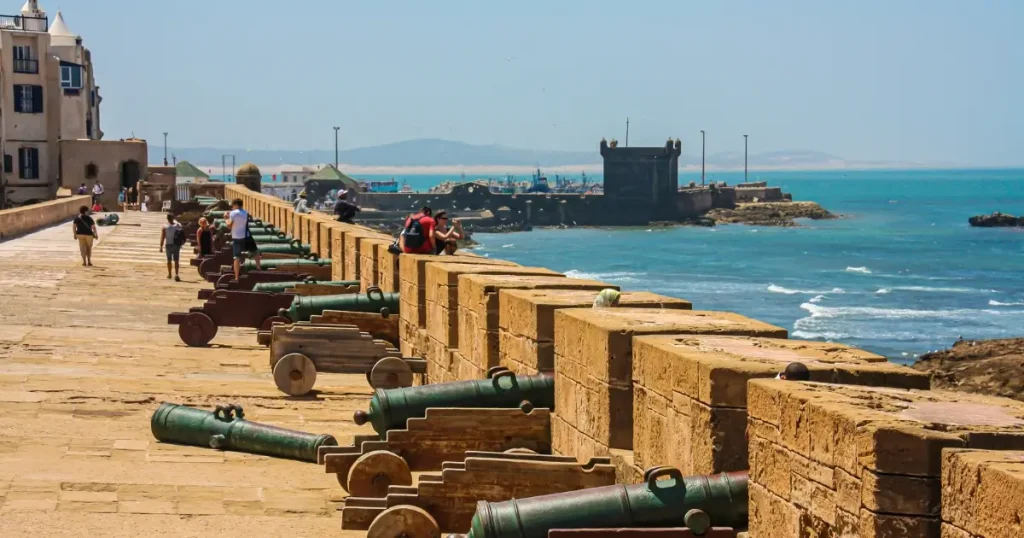
Essaouira (160 km north): The fortified port city of Essaouira is a UNESCO World Heritage Site, famous for its Portuguese-built ramparts, gnawa music culture, blue-and-white medina, and powerful Atlantic winds that make it a global kitesurfing capital. A two-hour drive north makes it an ideal overnight excursion from Taghazout.
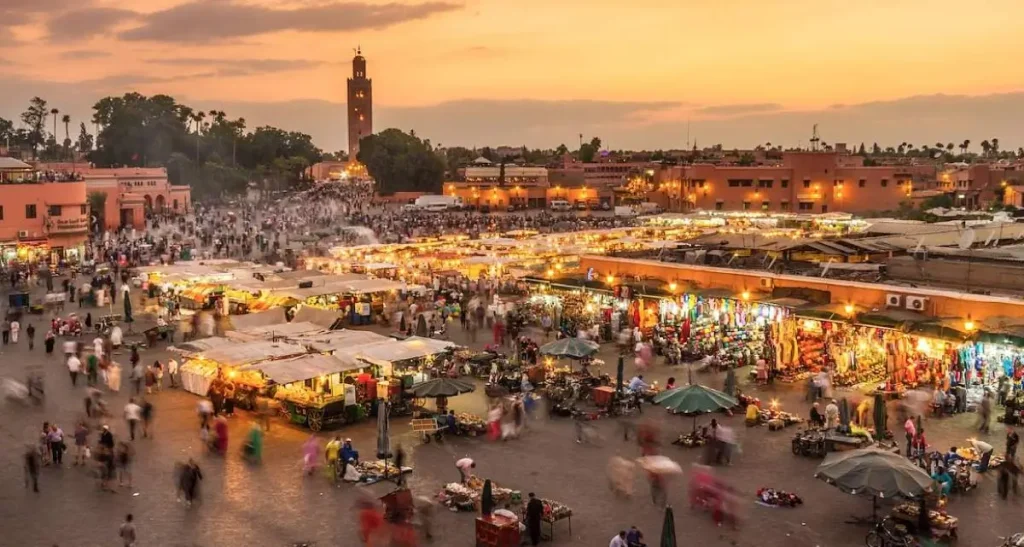
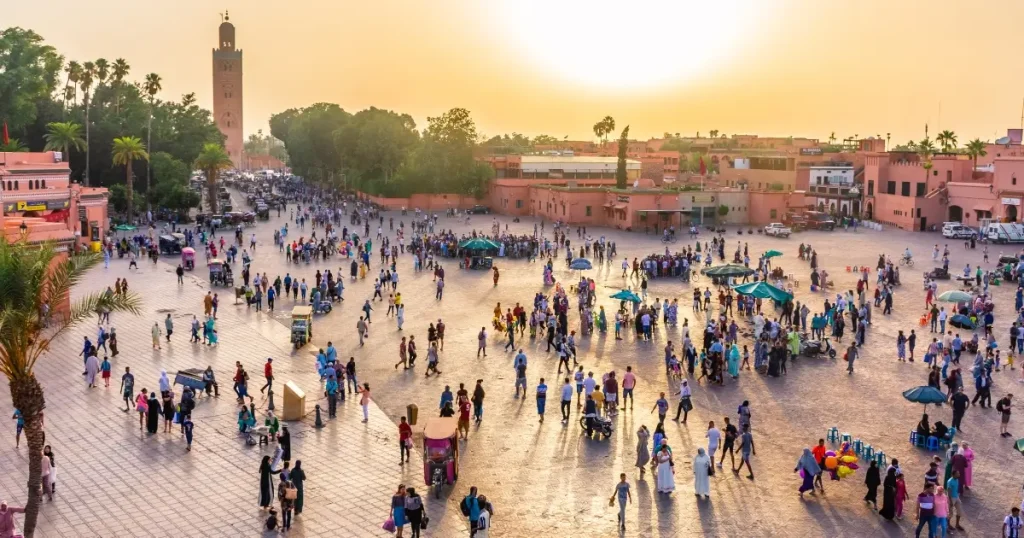
Marrakech (275 km northeast): The imperial city needs little introduction — its extraordinary medina, the Djemaa el-Fna square, the Majorelle Garden, and the labyrinthine souks represent some of the most immersive urban travel experiences in the world. Many visitors combine a Taghazout coastal stay with several days in Marrakech for a complete Moroccan journey.
Suggested 7-Day Travel Itinerary for Taghazout Morocco
Day 1 — Arrival and Orientation
Arrive at Agadir Airport, transfer to Taghazout (approximately 40 minutes). Check in to your accommodation, take a slow walk along the beachfront, and watch the sunset from Anchor Point. Dinner at a local beachside café with a fresh fish tagine.
Day 2 — First Surf Lesson
Morning surf lesson at Banana Beach or Panorama with a reputable local school. Afternoon wandering the village streets, exploring the alleyways, and visiting Bab Taghazout artisan market. Sunset cocktails at Amouage overlooking the bay.
Day 3 — Paradise Valley Day Trip
Full-day excursion to Paradise Valley in the Anti-Atlas foothills — swimming in the natural rock pools, picnicking beneath the palms, exploring the canyon. Return to Taghazout for dinner at Red Clay Café.
Day 4 — Surf, Yoga, and Hammam
Early morning rooftop yoga session overlooking the ocean. Morning surf session (intermediate level). Afternoon at the Tamraght Spa House for a traditional hammam. Dinner at Surf Berbère for the best tagine in town.
Day 5 — Agadir Day Trip
Day trip to Agadir: Souk El Had market for local produce and crafts, the reconstructed Medina of Agadir, and the beach promenade. Return to Taghazout for dinner.
Day 6 — Free Day on the Coast
Slow morning breakfast, optional second surf session or stand-up paddleboard rental. Afternoon at Panorama Beach. Sunset at Anchor Point. Evening exploring Café Tayoughte.
Day 7 — Final Morning and Departure
Sunrise walk along the boardwalk to Tamraght. Final mint tea and amlou breakfast. Transfer to Agadir Airport for departure.
Accommodation Recommendations
Luxury
Fairmont Taghazout Bay is consistently rated the finest hotel in the region, featuring exceptional ocean-view suites, a vast 15,000-square-foot spa, multiple restaurants, two pools (including an adults-only pool), and direct beach access. The orange-and-brown Moroccan-influenced décor, extraordinary staff, and sunset views make it one of the most memorable luxury stays in North Africa.
Hilton Taghazout Bay Beach Resort & Spa and Hyatt Regency Taghazout round out the luxury tier along the bay, each offering comprehensive international amenities, surf access, wellness facilities, and impeccably located beachfront positions.
Mid-Range
Surf Maroc operates a collection of boutique surf houses and riads in and around Taghazout, offering stylishly designed rooms, excellent surf guiding services, communal spaces with rooftop terraces, and an authentic connection to the surf culture that defines the village. Their Amouage property is particularly celebrated for its bar, terrace, and coastline views.
SunDesk serves the growing digital nomad and remote worker community with comfortable private rooms, reliable high-speed internet, coworking spaces, and a community atmosphere. Located in Tamraght, it offers easy access to Taghazout while providing the connectivity infrastructure that laptop workers require.
Budget
Playa del Sol (Tamraght) is a highly regarded budget guesthouse that has earned exceptional reviews since opening in 2023, thanks to quality service, attractive décor, a private room hot tub, and excellent included breakfast. For surf camp accommodation, numerous locally-owned hostels and surf houses throughout Taghazout offer dorm beds from approximately €15–20 per night, combining community atmosphere with surf culture immersion. AdventureKeys Hostel is a well-recommended option for budget travelers prioritizing reliable WiFi and a social environment.
Responsible Tourism and Cultural Etiquette
Travel to Taghazout Morocco carries a responsibility to engage with the destination respectfully, both for the benefit of the community and to preserve the authenticity that makes the village so special.
Support local businesses. Eat at family-owned restaurants, buy crafts directly from artisans at the village market, and use locally operated surf schools rather than internationally owned franchises wherever possible. The economic benefit of keeping tourism spending within the local community is profound.
Respect Islamic customs. Taghazout’s Muslim heritage shapes the rhythm of daily life. During the call to prayer, be respectful and quiet near mosques. During Ramadan (dates shift annually), refrain from eating, drinking, or smoking in public during daylight hours in observance of local fasting customs.
Dress appropriately outside beach areas. Swimwear is entirely appropriate on the beach and at resort pools, but covering up when walking through the village streets and market shows basic respect for local norms and will result in noticeably warmer interactions with residents.
Reduce plastic use. Taghazout Bay is a marine environment of significant ecological value. Avoid single-use plastics wherever possible, never leave waste on the beach, and if you surf, practice ocean stewardship — removing litter from the water when you find it.
Photograph respectfully. Always ask permission before photographing individuals, particularly women and the elderly. Many locals are happy to be photographed, but assuming permission is both rude and culturally inappropriate.
Frequently Asked Questions About Travel to Taghazout Morocco
Is Taghazout worth visiting if I don’t surf?
Absolutely. While surfing is central to Taghazout’s identity, the village offers a compelling experience for non-surfers through its beautiful beaches, yoga culture, excellent food scene, hammam experiences, artisan markets, day trips to Paradise Valley and Essaouira, and the simple pleasure of immersing yourself in Moroccan coastal village life.
How many days should I spend in Taghazout?
Three days is a reasonable minimum to get a feel for the village and its surroundings. Seven to ten days allows you to take surf lessons, complete a day trip to Paradise Valley and Agadir, settle into the rhythm of local life, and explore the wider coastline at a pace that lets the place genuinely sink in.
Is Taghazout safe for solo female travelers?
Taghazout is considerably more relaxed and comfortable for solo female travelers than many other Moroccan destinations, largely due to its surf culture and international visitor base. Standard travel awareness applies — be mindful of your surroundings at night, use reputable accommodation, and dress modestly outside beach areas. Many solo female travelers report having excellent experiences here.
What is the currency in Taghazout and can I use credit cards?
Morocco’s currency is the Dirham (MAD). Cash is strongly preferred throughout Taghazout. While card acceptance is growing in larger hotels and restaurants, carry sufficient cash for daily needs. Exchange currency at Agadir Airport or at banks in Agadir city.
Do I need a visa to visit Morocco?
Citizens of most EU countries, the United Kingdom, the United States, Canada, and Australia do not require a visa for stays of up to 90 days in Morocco. Always verify current entry requirements through official government sources before travel, as policies can change.
What language is spoken in Taghazout?
Tachelhit Berber is the primary local language, with Moroccan Arabic widely spoken. French is commonly used in tourism and business contexts. English proficiency is increasingly prevalent among surf guides, hotel staff, and younger residents. Basic French phrases are appreciated and useful throughout Morocco.
Can I learn to surf in Taghazout as a complete beginner?
Yes — Taghazout is one of the world’s best destinations for beginner surfers. Banana Beach and Panorama provide gentle, consistent waves ideal for first lessons, and the concentration of experienced, patient local surf instructors means you are in good hands from your very first session.
What is the best restaurant in Taghazout?
This depends on what you are looking for. Red Clay Café is consistently praised as the village’s finest café for creative plant-based food and excellent coffee. Surf Berbère is the go-to for the best traditional tagine. Café Tayoughte is beloved for authentic Moroccan meals with sunset views directly on the beach.
How do I get from Agadir Airport to Taghazout?
The most straightforward options are a pre-booked private transfer (approximately €18–32), a negotiated grand taxi from outside the terminal, or the Souk to Surf shuttle service. The journey takes approximately 40 minutes in normal traffic conditions.
Is Taghazout family-friendly?
Yes. The calm waters of Banana Beach and the sheltered bay, the availability of beginner surf lessons for children, the beachfront promenade, and the generally safe and welcoming atmosphere make Taghazout an excellent family beach destination, particularly during the summer months when the sea is calmer.
Conclusion — Why You Should Travel to Taghazout Morocco This Year
There are beach towns, and then there are places that change you. Taghazout is one of the rare latter category — a village where the ocean does something to your sense of time, where a mint tea at sunset feels like a philosophical event, and where the interplay of ancient Berber culture, free-spirited surf energy, and genuine Moroccan warmth creates something that no hotel brochure can adequately prepare you for.
Travel to Taghazout Morocco is travel to a place in transition — but transitioning beautifully. The luxury hotels and yoga retreats do not cancel out the fishing boats and the argan oil sellers and the cats sleeping on the walls. They coexist in a way that reveals Morocco’s extraordinary capacity to absorb the modern world without surrendering its soul.
Whether you come for the waves, the wellness, the food, the sunsets, or simply because you need to stand somewhere on earth that makes the noise stop, Taghazout will deliver. Go now, while the mornings are still quiet enough to hear the fishermen heading out. Go before the crowds fully arrive. And when you leave, you will already be planning when to come back.
Article written for SEO optimization with Rank Math. Main keyword: Travel to Taghazout Morocco. Supporting semantic keywords used naturally throughout: Taghazout surf, Anchor Point Morocco, Taghazout Bay, things to do in Taghazout, best restaurants Taghazout, Taghazout accommodation, surf Morocco, Morocco travel guide, Paradise Valley Morocco, Taghazout yoga, hammam Morocco, Moroccan beach destination, Souss-Massa Morocco, Atlantic coast Morocco.