Travel to Morocco and you step into one of the world’s most captivating destinations — a land where ancient medinas echo with centuries of history, where the Sahara stretches endlessly beneath a blazing sun, and where warm Moroccan hospitality wraps around every visitor like a familiar embrace. Whether you are preparing to go to Morocco for the first time or returning to rediscover its magic, understanding the airport experience and traveler safety essentials will transform your journey from uncertain to extraordinary. This comprehensive guide walks you through every step — from your first moments at a Moroccan airport to navigating the country’s most iconic destinations with confidence, clarity, and complete peace of mind.
Why Travel to Morocco Is One of the Best Decisions You’ll Ever Make
Morocco is not merely a destination — it is an experience that rewires your senses. The call to prayer drifting across terracotta rooftops at dawn, the scent of saffron and cumin rising from souks that have traded for a thousand years, the impossible blue of Chefchaouen reflecting in narrow alleyways — these are not postcards. They are real, and they are waiting for you.
Yet for many travelers, the first question before they go to Morocco is a practical one: Is it safe? What happens when I land at the airport? How do I get from arrivals to my riad in the medina? These are entirely reasonable questions, and answering them thoroughly is the mission of this guide.
Morocco welcomed over 14 million international tourists in recent years, consistently ranking among Africa’s top travel destinations. Its infrastructure is modern, its tourism industry is well-developed, and its people are overwhelmingly welcoming to foreign visitors. With the right preparation, travel to Morocco becomes not just safe — it becomes seamless.
Morocco’s Appeal to the Modern Traveler
From the imperial cities of Fez, Marrakech, Meknes, and Rabat to the coastal charm of Essaouira and the dramatic landscapes of the Atlas Mountains, Morocco offers a staggering diversity of experiences within a relatively compact geography. You can have breakfast in a mountain village, lunch in a desert camp, and dinner on an oceanfront terrace — all within a single day of inspired travel.
The country also benefits from excellent flight connectivity. Major international airports serve Morocco’s key cities, making it easier than ever to go to Morocco directly from Europe, North America, the Middle East, and beyond.
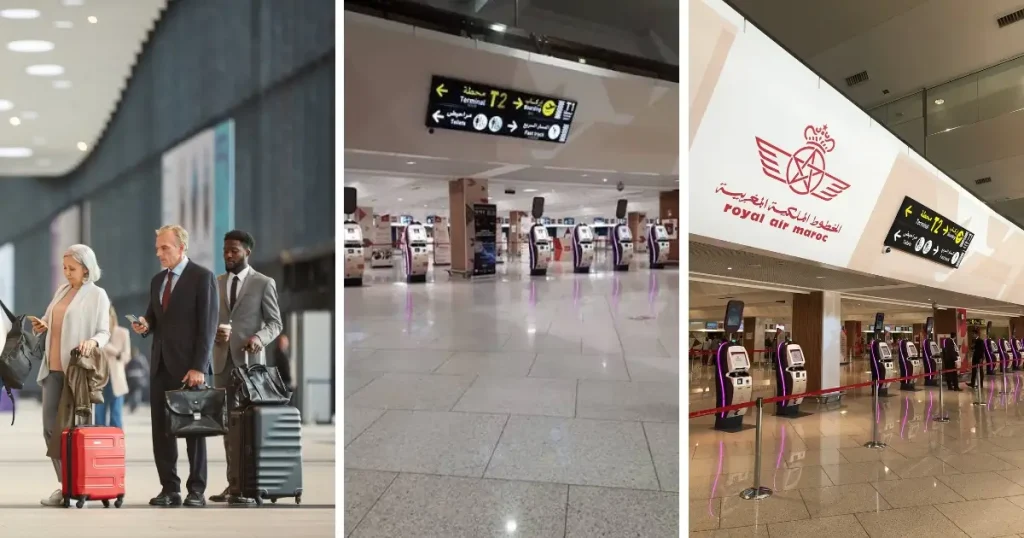
Arriving at Morocco Airports — What Every Traveler Needs to Know
Your travel to Morocco experience officially begins the moment your aircraft touches down. Understanding what to expect at Moroccan airports removes anxiety and allows you to move through arrivals with efficiency and calm.
Mohammed V International Airport — Casablanca
Mohammed V International Airport in Casablanca is Morocco’s largest and busiest airport, handling the majority of long-haul international flights. Located approximately 30 kilometers southeast of Casablanca’s city center, it serves as the primary hub for Royal Air Maroc and receives flights from dozens of global carriers.
Upon arrival, passengers follow clearly marked signage to passport control. The process is generally efficient. EU, US, Canadian, and many other passport holders do not require a visa in advance — entry for tourism is granted on arrival for stays up to 90 days. You will need to complete a landing card, available on the aircraft or at the airport itself. Keep your accommodation address handy, as it is required on this form.
After clearing passport control, you proceed to baggage claim and then through customs. Morocco operates a green channel / red channel system. If you have nothing to declare beyond personal effects, the green channel moves quickly. Customs officers are professional and courteous with compliant travelers.
Marrakech Menara Airport
For travelers flying directly into the south, Marrakech Menara Airport is the gateway to the Red City. It is a well-equipped, modern facility that handles millions of passengers annually, particularly from European budget carriers. The airport is located just a few kilometers from Jemaa el-Fna, Marrakech’s legendary central square, making access to the city exceptionally convenient.
Arrivals at Marrakech Menara follow the same passport and customs procedures as Casablanca. The terminal is compact and easy to navigate, and signage is available in Arabic, French, and English.
Fez–Saïss Airport and Other Regional Airports
Morocco also operates well-functioning regional airports in Fez, Agadir, Tangier, Rabat, and Ouarzazate, among others. These airports serve primarily European routes and domestic connections, making them excellent entry points if your itinerary focuses on a specific region. Travel to Morocco through a regional airport can save you significant overland travel time.
Airport Procedures and Traveler Tips for a Smooth Entry
Navigating any foreign airport for the first time can feel disorienting. Here are the essential tips that will help you move through Moroccan airports with ease when you go to Morocco.
Documentation You Must Have Ready
When you travel to Morocco, ensure you are carrying your original passport with at least six months of validity remaining beyond your entry date. While a visa is not required for citizens of many countries, having a return or onward ticket is advisable, as immigration officers may ask to see proof of your plans to depart. Hotel reservation confirmations are also useful to have printed or accessible on your phone.
Currency and the Airport Exchange
The Moroccan dirham (MAD) is the local currency and cannot be obtained outside the country in most cases. Airports in Morocco have currency exchange bureaus and ATMs in the arrivals hall. Exchange rates at airports are generally reasonable, and most major ATM networks function reliably. It is wise to withdraw or exchange enough cash for your first day — taxis, tips, and small purchases in medinas typically require cash.
SIM Cards and Connectivity
Morocco has good mobile network coverage, and purchasing a local SIM card is one of the smartest things a traveler can do immediately upon landing. Several major operators — Maroc Telecom, Orange Maroc, and Inwi — have counters or kiosks within or near the airport arrivals area. A local SIM with a data plan is inexpensive and gives you access to maps, translation apps, and communication tools that make travel to Morocco significantly smoother.
H3: Meeting Your Transfer or Taxi at the Airport
Official taxi services are available outside the arrivals terminal at all major Moroccan airports. Always use officially licensed taxis — these are metered or have fixed-rate zones posted at the airport information desk. Avoid unofficial drivers who may approach you inside the terminal offering rides at seemingly attractive prices; the official taxis are safe, regulated, and ultimately just as affordable.
Many riads and hotels in Morocco offer airport pickup services, which is an excellent option for first-time visitors. Confirm this arrangement in advance and have your accommodation’s contact number saved on your phone.
Transportation from the Airport to Your Destination
Getting from the airport to your accommodation is the first real adventure of your travel to Morocco experience. The options are varied depending on which city you have arrived in.
Casablanca Airport Train — The Most Efficient Option
Casablanca Mohammed V Airport is connected to the city center by a fast and affordable train service. The ONCF train departs from a station directly beneath the terminal and takes approximately 45 minutes to reach Casablanca Voyageurs station in the city center, from where connections to other cities including Rabat and Marrakech are available. This is by far the most efficient way to continue your journey after arrival.
Marrakech Taxis and Buses
From Marrakech Menara Airport, official petit taxis and grand taxis wait outside the terminal. A ride to the medina takes approximately 15 minutes under normal traffic conditions. There is also a municipal bus service that is extremely affordable, though it can be crowded with luggage. For comfort and ease upon arrival, a taxi or pre-arranged hotel transfer is the preferred choice.
Car Rental at Morocco Airports
All major airports in Morocco have car rental desks from international and local companies. Renting a car is an excellent way to explore Morocco’s countryside, mountain passes, and desert roads at your own pace. If you plan to drive, familiarize yourself with Moroccan road rules, which follow a right-hand traffic system similar to continental Europe and the United States.
Safety Tips When Entering Morocco
Morocco is a safe country for travelers by international standards. That said, like any destination, awareness and preparation make your experience more secure and enjoyable.
Understanding Morocco’s Safety Reputation
Travel to Morocco with the confidence that the country has a strong track record of tourist safety. The Moroccan government invests significantly in tourism security, and a dedicated tourist police presence — the Brigade Touristique — operates in major cities and tourist areas. Violent crime against tourists is rare. The most common challenges visitors face are petty theft in crowded markets and overly persistent informal guides or vendors, both of which are easily managed with awareness.
Staying Safe in Moroccan Medinas
The ancient walled medinas of Marrakech, Fez, Tangier, and other cities are wonderful to explore but can be disorienting due to their labyrinthine layout. Before you venture into the souks, download offline maps of the medina on your phone. Keep your valuables — passport, excess cash, and electronics — secured in a money belt or inside your bag rather than in easily accessible pockets. Dress modestly out of both cultural respect and practical security awareness.
Scams to Be Aware of When You Go to Morocco
When you go to Morocco, you may encounter a small number of persistent local individuals who offer to guide you through the medina and then request payment you did not agree to, or who steer you into specific shops for commission. The best approach is to be politely firm: decline unsolicited guide offers, agree on prices before any service, and trust your instincts. Most Moroccans you encounter will be genuinely kind and helpful — do not let the small minority of opportunists color your perception.
Travel Preparation Before Going to Morocco
The quality of your travel to Morocco experience is directly proportional to the quality of your preparation. Here is what to address before you depart.
Health and Vaccinations
No specific vaccinations are required to go to Morocco, though routine immunizations should be up to date. Hepatitis A and typhoid vaccinations are sometimes recommended for travelers who plan to eat extensively at street stalls or in rural areas. Consult your doctor or a travel health clinic at least four to six weeks before departure. Morocco has a good standard of healthcare in its major cities, and pharmacies are widely available and well-stocked.
Travel Insurance
Travel insurance is strongly recommended for all international travel, and travel to Morocco is no exception. Ensure your policy covers medical emergencies, evacuation, trip cancellation, and theft. Keep a digital and printed copy of your policy documents and the emergency contact number accessible throughout your trip.
Packing Smart for Morocco
Morocco’s climate varies dramatically by region and season. The coast and northern cities enjoy Mediterranean temperatures, while the Sahara can reach extreme heat in summer. Mountain areas including the High Atlas can be cold even in spring and autumn. Pack in layers, bring comfortable walking shoes for cobblestone medinas, and include a light scarf or shawl — useful for sun protection, cool evenings, and respecting dress codes when visiting mosques and religious sites.
Tourist Safety Across Moroccan Cities
Each city in Morocco has its own character, rhythm, and specific safety considerations for visitors.
Marrakech — The Red City
Marrakech is Morocco’s most visited city and is well-accustomed to international tourism. The central square of Jemaa el-Fna is one of the world’s great public spaces — buzzing with storytellers, musicians, snake charmers, and food stalls after dark. Stay alert in crowded spaces, keep your belongings secure, and enjoy the spectacle with confidence. The Gueliz district (the new city) offers a more relaxed, modern urban environment if the medina’s intensity becomes overwhelming.
Fez — The Spiritual Capital
Travel to Morocco and eventually you must go to Fez, the world’s largest living medieval city. The Fez el-Bali medina is a UNESCO World Heritage Site and an extraordinary sensory experience. It is also one of the most complex urban labyrinths on Earth — hiring a licensed official guide for your first day is genuinely recommended here, not just for safety but for the depth of cultural understanding they provide.
Chefchaouen — The Blue Pearl
Chefchaouen, the famously blue mountain town in the Rif Mountains, is one of Morocco’s most photographed and beloved destinations. It is relaxed, small, and exceptionally safe for travelers. The town is popular with solo travelers and photographers. Crime is virtually unheard of, and the atmosphere is gentle and welcoming.
Agadir — The Beach Resort City
Agadir is Morocco’s purpose-built beach resort city, heavily oriented toward package tourism and international visitors. It has a modern airport, wide boulevards, and a beach promenade. It is among the most straightforward and comfortable entry points for travelers new to Morocco who prefer a familiar holiday environment before venturing into the more immersive medina cities.
Essential Advice for First-Time Visitors to Morocco
If this is your first travel to Morocco experience, a few foundational pieces of advice will serve you well throughout your journey.
Learn a few words of Arabic or French. Even basic greetings in Darija (Moroccan Arabic) — salam alaikum for hello, shukran for thank you — will be met with warm smiles and will open doors that remain closed to those who do not try. French is widely spoken and understood in cities, and increasingly, English is spoken in tourist areas.
Respect local customs and culture. Morocco is a Muslim-majority country with deeply held values of hospitality, family, and religious observance. Dress modestly in medinas and rural areas. Remove your shoes when entering homes or mosques. Avoid public displays of affection. During Ramadan, be respectful of fasting hours in public spaces. These gestures of respect are not burdens — they are gateways to deeper, more authentic human connection.
Bargaining is part of the culture in souks and markets. Prices are often not fixed, and negotiating is expected and enjoyed. Approach it with good humor, never with aggression, and you will often achieve a fair price while having a genuinely entertaining interaction.
Travel Safety Checklist — Before You Go to Morocco
Use this checklist to ensure you are fully prepared for travel to Morocco:
- ✅ Passport valid for at least 6 months beyond your travel dates
- ✅ Return or onward travel ticket confirmed
- ✅ Accommodation addresses written down and confirmed
- ✅ Travel insurance policy purchased and documented
- ✅ Health vaccinations reviewed with a doctor
- ✅ Local currency (Moroccan dirham) plan — ATM or airport exchange
- ✅ Offline maps of destination cities downloaded
- ✅ Emergency contacts saved — embassy, insurance, accommodation
- ✅ Modest clothing packed for medinas and religious sites
- ✅ Phone unlocked for local SIM card purchase at airport
- ✅ Airport transfer or taxi plan confirmed
- ✅ Basic French or Arabic phrases learned
FAQ — Travel to Morocco, Airport Arrival & Safety
Is it safe to travel to Morocco as a solo traveler?
Yes. Morocco is considered safe for solo travelers, including solo women. Millions of independent travelers go to Morocco each year without incident. Standard urban awareness — securing valuables, staying in well-lit areas at night, trusting your instincts — applies here as in any destination.
Do I need a visa to go to Morocco?
Citizens of the United States, European Union, United Kingdom, Canada, Australia, and many other countries do not require a visa in advance to travel to Morocco for tourism stays of up to 90 days. Check your country’s specific visa requirements with the Moroccan embassy before you depart.
Which airport should I fly into for Morocco?
The best airport depends on your itinerary. Casablanca Mohammed V Airport offers the most international connections and is ideal if you want to explore multiple cities. Marrakech Menara Airport is perfect for a south-focused trip. Fez Airport is excellent for starting in the north and heading south.
Is the airport in Morocco easy to navigate?
Yes. Major Moroccan airports are modern, well-signposted, and have staff who speak Arabic, French, and English. First-time arrivals generally find the process straightforward, especially with the preparation outlined in this guide.
What currency should I bring to Morocco?
The Moroccan dirham is the local currency. You cannot obtain it easily outside Morocco, so plan to exchange money or withdraw from ATMs at the airport upon arrival. Most hotels and larger restaurants accept credit cards, but cash is essential for souks, taxis, and tips.
What is the best time to travel to Morocco?
Spring (March to May) and autumn (September to November) offer the most pleasant temperatures across most of Morocco. Summer is hot, particularly inland and in the desert. Winter can be cold in mountain regions but is mild on the coast and in southern cities.
Conclusion — The Journey Awaits: Go to Morocco
Travel to Morocco is more than a trip — it is a transformation. From the moment you step off the plane at a Moroccan airport and breathe in the warm, spice-tinged air of North Africa, something in you shifts. The ancient world meets the modern one in this extraordinary kingdom, and the experience it offers — of history, beauty, adventure, and human warmth — is unlike anything else on Earth.
Prepare well, arrive with an open heart, and let Morocco do what it has done for travelers across the centuries: astonish you, move you, and leave you already planning your return. Whether your journey begins in the gleaming terminal of Casablanca’s airport, at the sunlit arrivals hall in Marrakech, or on a small propeller flight descending toward the oasis city of Ouarzazate — it begins with a choice. Choose to go to Morocco. Choose the adventure. Choose the magic.
The medina gates are open. The mint tea is ready. Morocco is waiting.