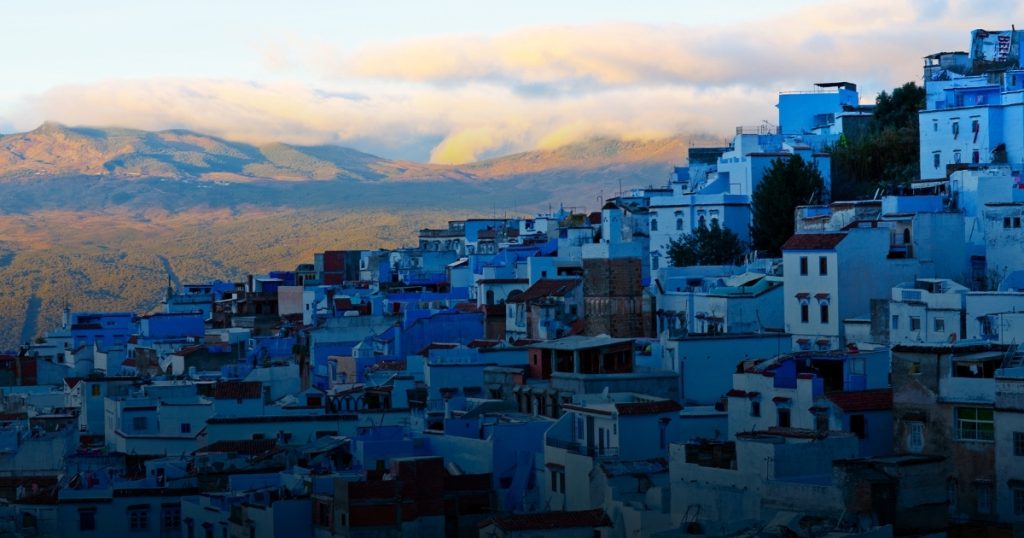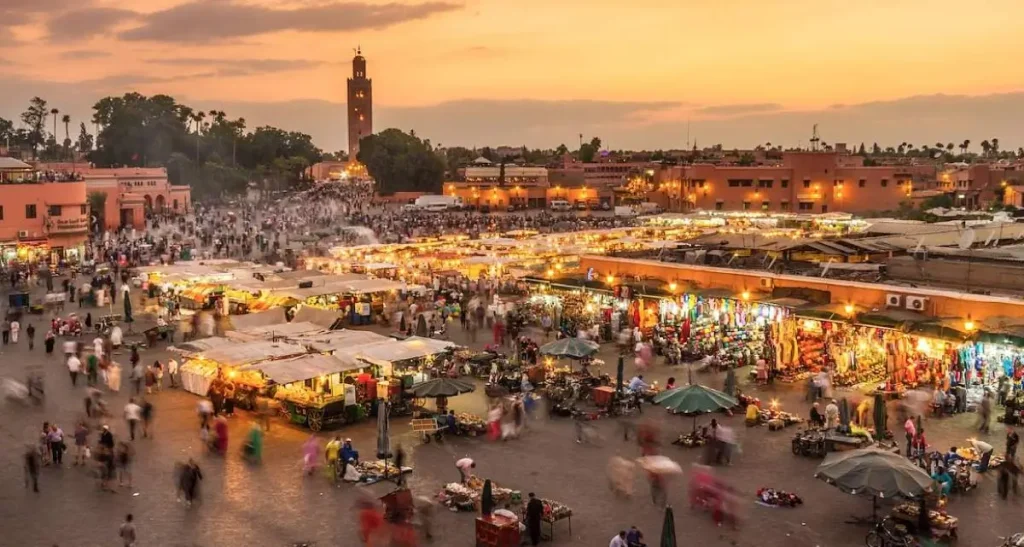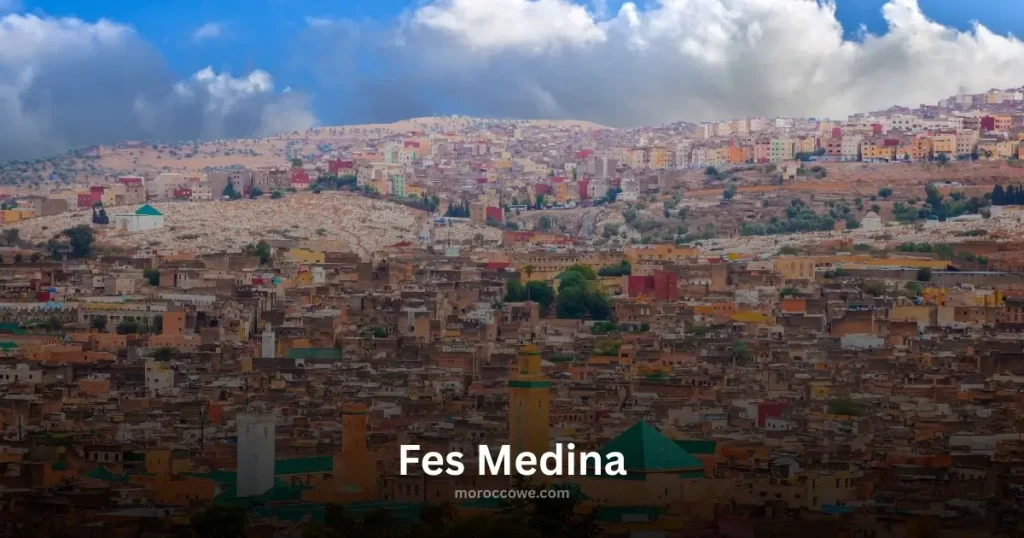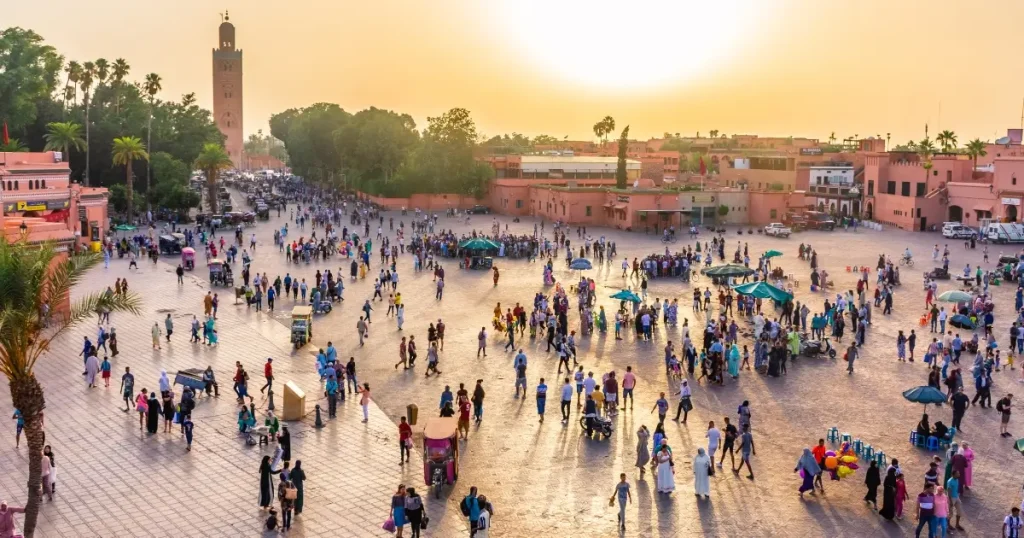
Moroccan Tangia Marrakech is not just a dish — it is a time machine, a love letter written in clay and fire, a sensory journey that pulls you deep into the heart of one of the world’s most enchanting cities. The moment you step off the plane in Marrakech and feel the warm Moroccan air wrap around you like a spice-soaked embrace, you already know this trip will be different. But nothing — not the rooftop terraces overlooking the Atlas Mountains, not the mosaic-tiled fountains of the medina, not even the hypnotic call to prayer echoing across the ancient rooftops — nothing prepares you quite like the first time you encounter a Tangia.
Picture this: a narrow alley in the old medina, the morning sun barely cresting the pale ochre walls, the scent of cumin and saffron drifting from a doorway no wider than your shoulders. Inside, a man lifts a sealed clay amphora from the embers of a traditional hammam furnace, and the steam that escapes carries with it a thousand years of Moroccan history. This is Tangia. This is Marrakech.
If you are planning to travel to Marrakech, if you are searching for something genuinely authentic, something that no restaurant menu in Paris or London or New York can replicate, then the story of Moroccan Tangia is the story you have been waiting to find. It is the reason food lovers, cultural travelers, and adventurous souls keep returning to this city, again and again, as though drawn back by an invisible thread woven from cinnamon and preserved lemon.
Where Moroccan Tangia Comes From
To understand Moroccan Tangia, you have to understand Marrakech — not the Marrakech of glossy hotel brochures, but the ancient, living, breathing city that has existed within its red clay walls for nearly a thousand years.
Tangia is a dish born of necessity, ingenuity, and the particular genius of the Moroccan working class. Historians and food scholars trace its origins back several centuries, deep into the cultural fabric of Marrakech’s medina. Unlike the more internationally famous Tagine — which is cooked over low heat in a conical clay vessel and prepared across Morocco — Tangia is specifically and almost exclusively a Marrakchi creation. You will struggle to find an authentic version anywhere else in Morocco. This is the city’s dish, in the most possessive and proud sense of the word.
The legend goes that Tangia was originally conceived by the fhal — the unmarried working men, artisans, laborers, and craftsmen who populated the bustling workshops and souks of the medina. Without wives or mothers at home to cook for them, these men developed an ingenious solution. Every Friday morning, before heading to the hammam for the weekly ritual bath, they would prepare their clay pot: filling it with lamb or beef, preserved lemon, smen (aged Moroccan butter), a generous hand of cumin, saffron threads, garlic, and olive oil. The pot would be sealed with parchment and twine, and handed to the ferrach — the keeper of the public hammam furnace — who would bury it in the hot embers beneath the baths.
Hours later, sometimes after prayers, sometimes after socializing in the souk, the men would return. The Tangia would be ready. Slow-cooked in the residual heat of the hammam fires, the meat would have melted into a rich, golden stew of extraordinary depth. The clay pot, the fire, the communal ritual — these were not just cooking methods. They were a social institution, a weekly rhythm that bound communities together.
This is why Marrakech is the only place on earth to truly experience Moroccan Tangia. The dish is not just a recipe — it is a cultural practice, a living piece of Marrakchi identity, inseparable from the city’s hammams, its medina streets, and the unhurried pace of its traditional life.
Marrakech — The Only Place to Experience Authentic Tangia
The Medina and Traditional Atmosphere
There are cities that you visit, and there are cities that visit you — that walk into your consciousness and take up permanent residence. Marrakech is unquestionably the latter. And nowhere does this hold more true than inside the ancient medina, a UNESCO World Heritage Site that has remained largely unchanged in its essential layout for centuries.
Entering the medina through the great arched gates — Bab Doukkala, Bab Agnao, Bab el-Khemis — is like stepping through a portal. The noise of modern Marrakech falls away. In its place: the rhythmic hammering of copper craftsmen, the call of spice vendors, the clatter of donkey carts navigating cobblestone alleys, the babble of Darija floating from open doorways. The walls here are the color of dried rose petals — that distinctive terracotta that earned Marrakech its nickname, the Red City.
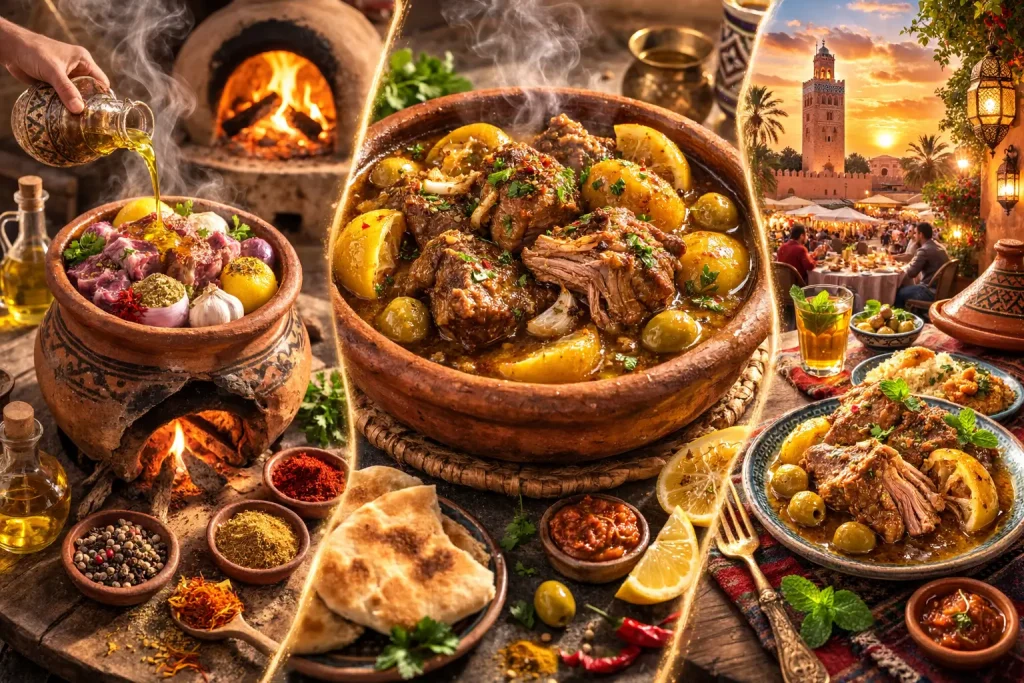
It is in these labyrinthine streets that Moroccan Tangia lives and breathes. Walk through the Mouassine quarter or toward the tanneries of Bab Debbagh in the early morning, and you may catch the sight that every serious traveler to Marrakech hopes for: a row of Tangia clay pots, each one sealed and labeled, leaning against the warm walls of a hammam furnace. The ferrach tends to them with the quiet attentiveness of a craftsman. These are not props for tourists — they are someone’s lunch, prepared with care and tradition.
The clay pots themselves — the tangia vessels that give the dish its name — are beautiful objects. Tall and narrow, shaped like ancient amphorae, they seem to belong to another time. In the souks of the medina you can find them stacked in ceramic shops, but the ones being used for cooking are blackened with use, seasoned by years of embers. Holding one feels like holding a piece of the city itself.
The smells of Marrakech’s medina are an education in Moroccan cuisine. The warm, dusty aroma of cumin. The sharp brightness of fresh coriander. The sweet, slightly smoky drift from street-side food stalls grilling kefta over charcoal. And underneath all of it, that deep, ancient smell of clay and hot embers that tells you Tangia is cooking somewhere nearby.
Why Tourists Must Visit Marrakech to Taste Real Tangia
There is a question that every serious food traveler eventually asks: can I experience this at home? Can I recreate it? And the honest answer, when it comes to Moroccan Tangia Marrakech, is: not really. Not fully. Not in any way that captures the whole experience.
You might find recipes online. You might even find clay pots sold in Moroccan import shops. But the experience of eating Tangia in Marrakech involves more than ingredients and technique. It involves the light. The noise. The feeling of sitting on a low wooden stool at a street-side stall, surrounded by locals who are eating with the relaxed familiarity of people doing something they have done every week of their lives. It involves the knowledge that the oven used to cook your meal is the same type of furnace that has been used in this city for a thousand years.
Authenticity, in travel, is a word that gets overused and under-delivered. Moroccan Tangia Marrakech is one of those rare experiences where the word earns its meaning. Visiting Marrakech to taste real Tangia is not a tourist activity. It is a genuine cultural immersion — one of the most accessible and profound ones available to visitors anywhere in the world.
Taste, Flavor, and Sensory Experience
If you have never tasted Moroccan Tangia, no description will fully prepare you. But let us try.
The first thing you notice is the color. When the clay pot is opened — gently, because tradition suggests it should only be unsealed at the moment of eating — a cloud of steam rises in pale gold. The liquid inside, reduced by hours of slow cooking, is a deep amber, threaded with saffron and gleaming with the fat rendered from the lamb. The meat, which began as rough-cut pieces or whole shanks, has surrendered entirely to the heat. It does not need cutting. It barely needs the effort of lifting with a fork. It falls, slowly, in long tender ribbons that gleam and steam.
The smell hits you before the taste. It is warm and complex — the earthiness of cumin, the floral sweetness of saffron, the sharp perfume of preserved lemon, and beneath all of it, the ancient scent of clay and wood smoke. It smells like history. It smells like Marrakech.
The first bite is a revelation. The lamb is impossibly tender, almost silky, with a richness that has been modulated — rescued from heaviness — by the brightness of the preserved lemon. The smen, the aged Moroccan butter, gives the dish a depth of flavor that is fundamentally different from anything you have tasted in Western cooking. It is fermented, slightly funky, deeply savory — the kind of flavor that your brain categorizes immediately as important, as foundational. The saffron provides a subtle sweetness. The cumin grounds everything in warm, dry earthiness. The garlic has melted entirely into the sauce, giving sweetness and body without assertiveness.
You eat Tangia in Marrakech with bread — the round, slightly dense Moroccan khobz, torn into pieces and used to scoop the meat and soak up the sauce. There are no utensils in the traditional sense. There is the bread, the pot, and your hands. There is something about eating this way — communally, without the formality of Western dining — that loosens something in you. You slow down. You pay attention. You are, without quite realizing it, eating not just a meal but a philosophy of life.
The emotional experience of eating Tangia in Marrakech is difficult to articulate. It is something like gratitude. Something like belonging. Something like the particular, rare pleasure of understanding — even briefly, even partially — what daily life in another culture actually feels and tastes like.
Health Benefits of Moroccan Tangia
Beyond its extraordinary taste, Moroccan Tangia offers a profile of nutritional benefits that align remarkably well with contemporary understanding of healthy eating — though the Marrakchis who developed it were guided by wisdom and necessity rather than nutritional science.
The primary protein source in Tangia — typically lamb or beef — provides high-quality complete protein, essential amino acids, and significant quantities of zinc, iron, and B-vitamins, particularly B12. For travelers who are active — and Marrakech rewards activity, with its endless streets and markets to explore — this is exactly the kind of fuel the body needs.
The slow-cooking method that defines Tangia’s preparation is itself a health advantage. When meat is cooked slowly over low heat, the collagen in the connective tissue breaks down into gelatin, which is highly bioavailable and beneficial for joint health, gut lining integrity, and skin elasticity. The resulting broth is rich in minerals that leach gently from the bones during the extended cooking time.
The spices used in Tangia are not merely flavoring agents. Cumin, one of the most prominent, has been shown in multiple studies to support digestion, improve blood sugar management, and provide antioxidant compounds. Saffron — used generously in authentic Tangia — contains crocin and safranal, compounds with established anti-inflammatory and mood-supporting properties. Garlic brings its well-documented cardiovascular and immune benefits. Preserved lemon provides vitamin C and beneficial fermentation compounds that support gut microbiome health.
Olive oil, used as the cooking fat alongside smen, provides monounsaturated fatty acids associated with heart health and reduced inflammation. The overall caloric density of Tangia is moderate, particularly for a dish so satiating — the combination of protein, fat, and complex flavors means a relatively small quantity provides genuine satisfaction.
In a world of processed foods and rushed eating, Moroccan Tangia is, in its own ancient way, a model of functional nutrition — real ingredients, whole foods, slow preparation, communal consumption.
How Moroccan Tangia Is Traditionally Prepared
The preparation of Tangia is both simple and ritualistic — a combination that is deeply characteristic of Moroccan culinary tradition.
It begins with the clay pot itself. The tangia vessel is an elongated amphora, typically around 30 to 40 centimeters tall, with a narrow neck and a rounded base. It is unglazed on the outside, which allows a small degree of moisture exchange during cooking, contributing to the unique texture of the final dish. Before use, a new pot is often seasoned with olive oil and heated gently to close any micro-fissures in the clay.
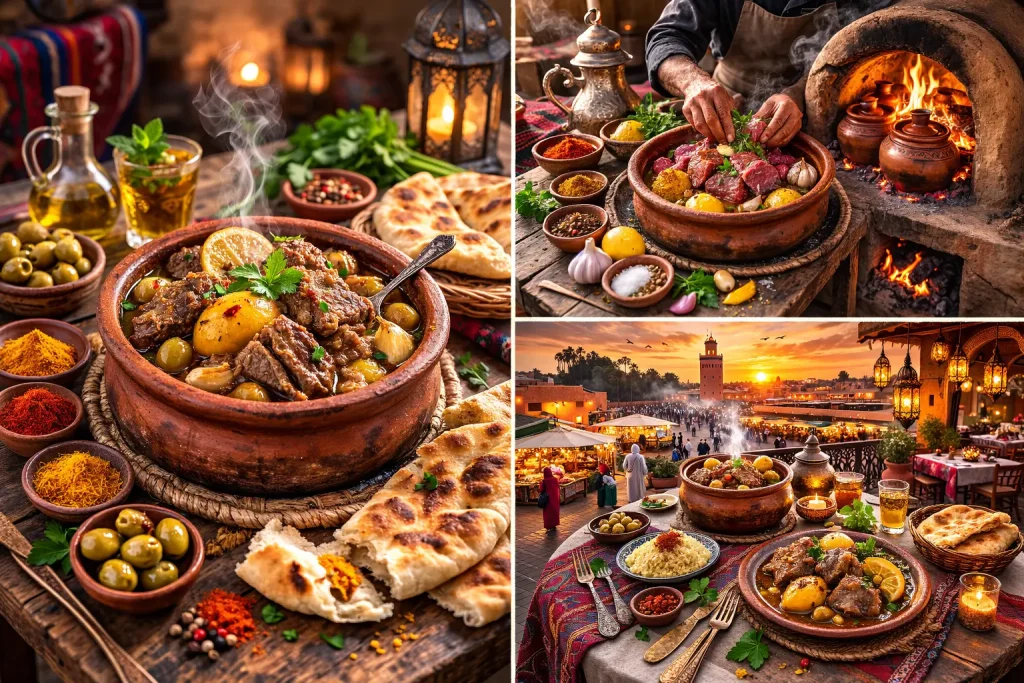
The ingredients — lamb shoulder or shank, preserved lemon quarters, a generous quantity of whole garlic cloves, cumin, saffron, smen, olive oil, salt, and sometimes a sprig of fresh coriander — are layered into the pot without pre-cooking or browning. There is no sautéing of aromatics, no reduction of liquids, no multi-step preparation. Everything goes in raw. This is not laziness — it is an understanding that the long, slow heat will do all the work, developing complexity that no amount of active cooking could replicate.
The pot is sealed with a piece of parchment paper or a thick sheet of natural paper, which is tied tightly around the neck with twine. This seal is important: it prevents liquid from evaporating during the long cook and creates a pressure environment inside the pot that helps break down the meat fibers.
The sealed Tangia is then delivered to the ferrach at the nearest hammam. The furnace beneath a traditional hammam burns continuously to heat the water above — it runs on wood, argan shells, or compressed sawdust, generating consistent heat of around 100–120°C in the ash bed. The Tangia pots are nestled into the warm ash and embers, not over direct flame, and left to cook slowly for anywhere between 5 and 10 hours.
This method — sometimes called k’dra cooking, referring to the tradition of leaving food in communal ovens — is one of the oldest cooking techniques in North Africa. It requires patience, trust, and community. The ferrach is a trusted figure in the neighborhood, responsible for dozens of pots simultaneously. When the Tangia is retrieved, the seal is broken at the table, and the steam that rises carries with it the accumulated hours of slow transformation.
Why Moroccan Tangia Is a Must-Try Experience for Tourists
There is a difference between eating food and having a food experience. Most meals, even excellent ones, fall into the first category. A handful — distributed across a lifetime of travel — belong to the second. Moroccan Tangia Marrakech is in that rare second category.
When you travel to Marrakech and seek out Tangia, you are doing something that most tourists never quite manage: you are stepping off the beaten path and into the actual living culture of the city. You are not observing Moroccan life from behind glass, from the safety of a hotel restaurant or a tour bus window. You are participating in it — sitting where locals sit, eating what they eat, experiencing the rhythms of a city that has been doing things this way for generations.
This is the greatest gift that travel can give: not the monument or the museum or the Instagram photograph, but the moment of genuine connection — the shared meal that crosses language, background, and culture in a single, eloquent bite.
Every serious traveler who visits Marrakech should eat Tangia. Not because it is fashionable or because a food influencer recommended it, but because it is real. Because it will teach you something about Marrakech that no guidebook can convey. Because you will remember it — the clay pot, the saffron-gold steam, the soft yielding lamb, the torn bread, the sounds of the medina around you — long after you have forgotten the name of your hotel.
Moroccan Tangia Marrakech is a must-try experience because it is, in miniature, the whole philosophy of Moroccan hospitality and culture: patience, generosity, depth, community, and the belief that the best things in life are worth the time it takes to make them properly.
Visiting Marrakech — A Culinary Journey Beyond Expectations
Marrakech ranks consistently among the world’s most visited cities, and for reasons that go well beyond its famous rose-pink architecture and the legendary chaos of Djemaa el-Fna square. This is a city that rewards the curious, the unhurried, and the genuinely interested traveler with experiences that feel increasingly rare in our globalized world.
The food culture of Marrakech is inseparable from its streets and its markets. The medina’s souks — organized by craft and trade in a system unchanged for centuries — are also, in many ways, a food tour. The spice stalls in the Rahba Kedima market pile their wares in pyramids of gold and amber: turmeric, paprika, ginger, ras el hanout blends so complex they contain up to 30 different spices. The vendors here will invite you to smell, to taste, to ask questions. They are proud of what they sell, and the knowledge they carry about these spices — their uses, their histories, their combinations — is genuinely profound.
Beyond the spice souks, Marrakech offers a culinary journey that spans from the humble to the spectacular. Street food stalls around Djemaa el-Fna serve bissara — a thick, garlicky fava bean soup eaten with olive oil and cumin — for breakfast. The same square transforms at dusk into one of the world’s most extraordinary open-air food markets, with dozens of stalls serving everything from snail broth to lamb’s head to fresh-squeezed orange juice. Traditional restaurants — riads — hidden behind anonymous doorways in the medina, reveal interior courtyards of breathtaking beauty, where multi-course Moroccan feasts are served with the ceremony and care of fine dining.
The traditional lifestyle of Marrakech is visible in the cooking. Time is differently valued here. A woman kneading dough for msemen flatbread at dawn, a man tending his clay pots at the hammam, an old merchant drinking tea in the doorway of his spice shop — these are images of a culture that has not surrendered its essential rhythms to modernity. Travel to Marrakech Morocco and you will find a city that is simultaneously ancient and alive, traditional and dynamic, humble and magnificent.
The Marrakech travel guide you carry may point you toward the Koutoubia Mosque, the Saadian Tombs, the Bahia Palace — and these are indeed magnificent. But the city’s greatest attraction is its living culture, and the best way to access that culture is through its food. Through Moroccan Tangia.
FAQ About Moroccan Tangia Marrakech
Where can tourists try Tangia in Marrakech?
The most authentic places to try Moroccan Tangia Marrakech are the small, unpretentious restaurants and food stalls in the medina — particularly around the areas of Bab Doukkala, the Mouassine neighborhood, and the streets surrounding the central hammams. Look for places where locals are eating, where the menu is short and handwritten, and where clay pots are visible. Some well-known spots include restaurants in the Mellah district and near the Djemaa el-Fna square. Ask your riad host or a trusted local guide — they will know which spots are currently serving the best Tangia.
Is Tangia healthy?
Yes — Moroccan Tangia is, by most measures, a nutritious and wholesome meal. It is rich in high-quality protein from the slow-cooked lamb or beef, provides beneficial minerals including iron and zinc, and derives its depth of flavor from whole spices with significant health properties: cumin, saffron, garlic, and preserved lemon. The slow-cooking method preserves nutrients and produces a collagen-rich broth beneficial for joint and gut health. It is made with natural, unprocessed ingredients — no additives, no preservatives, no shortcuts.
What makes Tangia unique compared to other Moroccan dishes?
Several factors make Moroccan Tangia Marrakech truly distinctive. First, its geographical specificity: this is a dish of Marrakech, not of Morocco broadly. Second, its cooking method: the use of hammam furnace heat — low, slow, and indirect — creates a texture and depth of flavor impossible to replicate with conventional cooking methods. Third, its cultural context: Tangia was and remains a dish tied to specific social rituals, specifically the communal Friday preparation and the brotherhood of working men in the medina. Finally, the vessel itself — the clay amphora that gives the dish its name — is both a cooking tool and a piece of cultural heritage.
Is Tangia different from Tajine?
Yes, significantly so. While both are slow-cooked Moroccan stews using similar spice profiles, the differences are important. Tajine is cooked in the conical clay vessel known as a tajine over low heat, usually on a stovetop or charcoal brazier, and is prepared across all of Morocco in various regional versions. Tangia is cooked in a tall, sealed amphora-style clay pot, buried in the ash of a hammam furnace, and is specific to Marrakech. Tajine is a family dish, cooked at home or in restaurants everywhere in Morocco. Tangia is historically a bachelor’s dish, a working man’s meal, tied to the hammam culture of one specific city. The flavor profiles differ as well: Tangia tends to be richer, smokier, and more intensely concentrated due to the longer cooking time and sealed environment.
Why is Marrakech famous for Tangia?
Marrakech is famous for Moroccan Tangia because the dish was invented here and exists authentically nowhere else. The combination of the city’s specific culinary traditions, its hammam culture, the availability of the distinctive clay pots, and the unbroken continuity of the preparation ritual has kept Tangia alive as an authentic Marrakchi institution for centuries. In a world where traditional foodways are rapidly disappearing under the pressure of globalization and industrialization, Marrakech’s relationship with Tangia is a remarkable example of living culinary heritage. The dish is also a source of civic pride — Marrakchis consider Tangia theirs in a profound sense, and they are right to.
Moroccan Tangia Recipe
Ingredients Table
| Ingredient | Quantity (for 4 people) | Purpose |
|---|---|---|
| Lamb shoulder or shank | 1.2 kg, cut into large pieces | Primary protein and fat source |
| Preserved lemon | 1 whole, quartered | Brightness, acidity, depth |
| Garlic cloves | 8–10, whole, unpeeled | Sweetness, body, aroma |
| Ground cumin | 2 teaspoons | Warm earthiness, foundational spice |
| Saffron threads | A generous pinch (½ teaspoon) | Golden color, floral sweetness, complexity |
| Smen (aged Moroccan butter) | 2 tablespoons | Fermented depth, richness |
| Extra-virgin olive oil | 3 tablespoons | Fat for cooking, fruity richness |
| Fresh coriander | 1 small bunch | Herbal freshness |
| Salt | To taste | Seasoning |
| White pepper | ½ teaspoon | Gentle heat |
| Water or light broth | 200 ml | Liquid base for slow cooking |
Preparation Steps Table
| Step | Description |
|---|---|
| 1. Prepare the clay pot | If using a new clay pot, season it by rubbing the interior with olive oil and heating it gently. Allow to cool before filling. |
| 2. Layer the ingredients | Place the lamb pieces directly into the tangia pot. Add the preserved lemon quarters, whole garlic cloves, and fresh coriander. |
| 3. Add the spices | Sprinkle the cumin, saffron, salt, and white pepper evenly over the meat. Add the smen and pour over the olive oil. |
| 4. Add liquid | Pour the water or light broth into the pot. The liquid should come approximately one-third of the way up the meat — do not overfill. |
| 5. Seal the pot | Cover the opening tightly with parchment paper, then a second layer of foil if needed, and secure firmly with kitchen twine. The seal must be airtight. |
| 6. Slow cook | Ideally, bury the pot in warm ash in a hammam furnace for 6–8 hours. At home, cook in an oven at 130°C (265°F) for 5–6 hours. Do not open during cooking. |
| 7. Rest and open | Remove from heat and allow to rest for 15 minutes. Open the seal at the table — the ritual of the opening is part of the experience. |
| 8. Serve | Serve directly from the clay pot with warm Moroccan khobz bread for scooping. No utensils required. |
Conclusion — Why You Must Visit Marrakech to Experience Moroccan Tangia
There is a version of travel that is comfortable and safe and predictable — the kind that keeps you near familiar food and familiar routines, that measures success by the number of monuments photographed and the quality of hotel Wi-Fi. And then there is another kind of travel: the kind that changes you, that leaves you genuinely different from the person who packed that suitcase and boarded that flight. That second kind of travel always involves food. It always involves sitting down with locals, letting your guard drop, letting the unfamiliar become familiar, letting yourself be nourished not just by calories but by culture.
Moroccan Tangia Marrakech is an invitation to that second kind of travel.
When you visit Marrakech Morocco and seek out this ancient, extraordinary dish, you are doing more than eating lunch. You are stepping into a lineage of human experience that stretches back centuries. You are connecting with the working men who carried their clay pots to the hammam on Friday mornings, with the ferrach who tended the fires with such casual expertise, with the generations of Marrakchis who have marked their weeks and their seasons by the ritual of the Tangia. You are, for a brief and beautiful moment, part of something much larger than yourself.
Marrakech is a city that will get under your skin. Its colors — the saffron yellow, the deep terracotta red, the vivid turquoise of the tilework — will stay with you. Its sounds — the call to prayer, the hammering of craftsmen, the multilingual bustle of the souks — will stay with you. And the taste of Tangia — that extraordinary meeting of saffron and preserved lemon and meltingly tender lamb, served from a clay pot blackened by years of sacred fire — will stay with you longest of all.
Go to Marrakech. Walk into the medina without a plan. Follow your nose until you find a small restaurant with clay pots in the window and the sound of Arabic conversation inside. Sit down. Order Tangia. Tear your bread. Look around at the city that built this dish and the people who have kept it alive for a thousand years. Eat slowly. Pay attention.
This is authentic Moroccan food. This is Moroccan cuisine at its most honest and profound. This is the Marrakech travel guide no app will ever give you. And this — this meal, this moment, this beautiful convergence of fire and clay and time and spice — is exactly why we travel.
Have you experienced Moroccan Tangia Marrakech? Share your story in the comments below — we would love to hear about your journey to the Red City.