There are places in the world that stop you the moment you arrive—not because of a single monument, but because of a feeling. Essaouira is one of those rare places. Perched on a headland where the Atlantic pounds ancient stone ramparts, this coastal city delivers a calm that feels almost unreal. People come for a quick two-night stop and suddenly they’re extending to four, five, even a full week—because Essaouira doesn’t demand your energy the way bigger Moroccan cities do. It simply invites you to breathe.
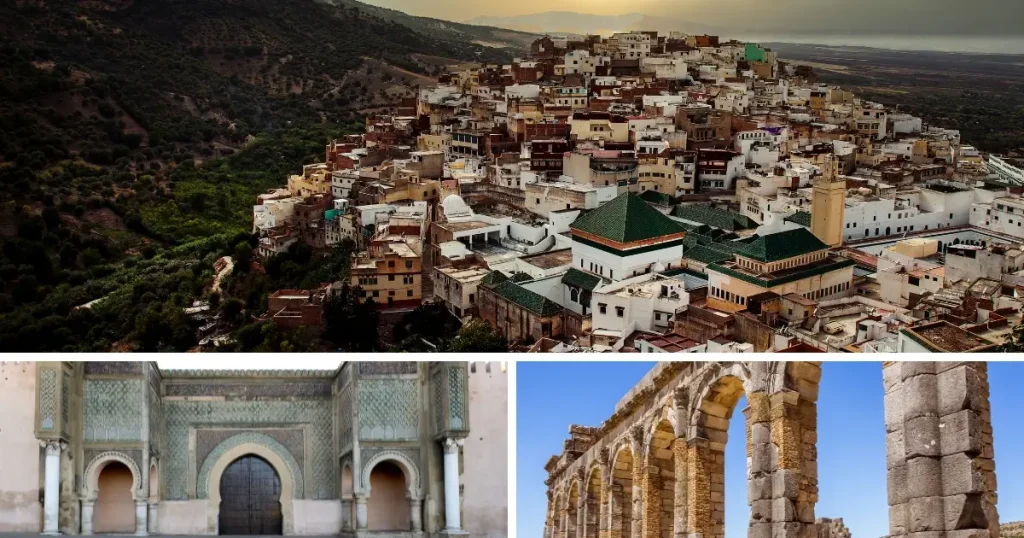
Known historically as Mogador and often nicknamed “the Windy City of Africa,” Essaouira sits about 170 kilometers west of Marrakech on Morocco’s Atlantic coast. Its medina—recognized as a UNESCO World Heritage Site in 2001—was designed in the 18th century with a European-inspired grid layout commissioned by Sultan Mohammed III. That structure makes the old town refreshingly walkable compared to the maze-like intensity of Fes or Marrakech. The result is a destination that feels both deeply Moroccan and wonderfully open: spacious lanes, bright coastal light, and a rhythm that belongs entirely to you.
This guide covers everything you need to plan a smooth, unforgettable trip: why Essaouira deserves a spot on your Morocco itinerary, what to see and do, culture and food, the best time to visit, safety tips, where to stay, and how to get there.
In This Guide
- Why Visit Essaouira, Morocco
- Top Attractions in Essaouira
- Best Things to Do in Essaouira
- Local Culture and Authentic Experiences
- Traditional Food and Culinary Experiences
- Best Time to Visit Essaouira
- Travel Tips and Safety Information
- Nearby Destinations Worth Visiting
- Where to Stay in Essaouira
- How to Reach Essaouira
Why Visit Essaouira, Morocco
In a country filled with big, bold destinations, Essaouira stands out for one simple reason: it’s easy. The medina is calmer, the sellers are gentler, the streets are more spacious, and the ocean is always within earshot. Unlike the high-energy intensity of Marrakech’s souks or Fes’s deep labyrinth, Essaouira gives you a version of Morocco that feels soft around the edges—still authentic, still full of culture, but never exhausting.
That’s why it works for almost every travel style:
- History lovers get layers of Berber, Portuguese, French, and Jewish heritage.
- Surfers and kitesurfers chase steady trade winds and Atlantic swells.
- Artists and musicians find galleries, street sessions, and creative energy everywhere.
- Families love the traffic-free medina and long beach walks.
- Couples come for sunset ramparts and rooftop dinners with ocean air.
The best part? Essaouira delivers all that without the feeling of being “pulled” by tourism. You can browse a shop, pause for mint tea, or take photos in peace. If you’ve ever felt Morocco is incredible but overwhelming, Essaouira is your reset button.
Within minutes on the ramparts, many travelers realize this is a different side of Morocco—made for slow walks, quiet café moments, and sea-breeze afternoons.
Top Attractions in Essaouira
1) The UNESCO Medina
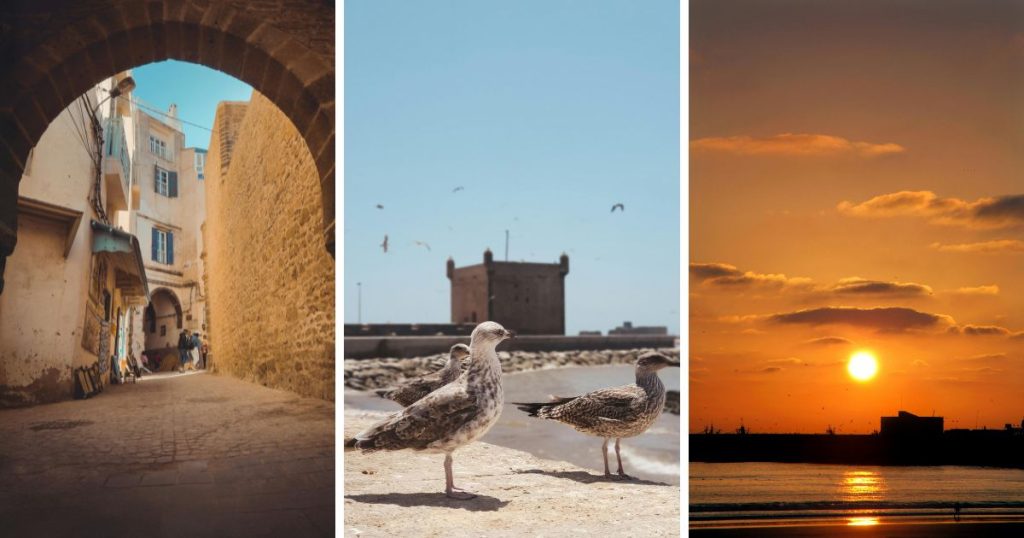
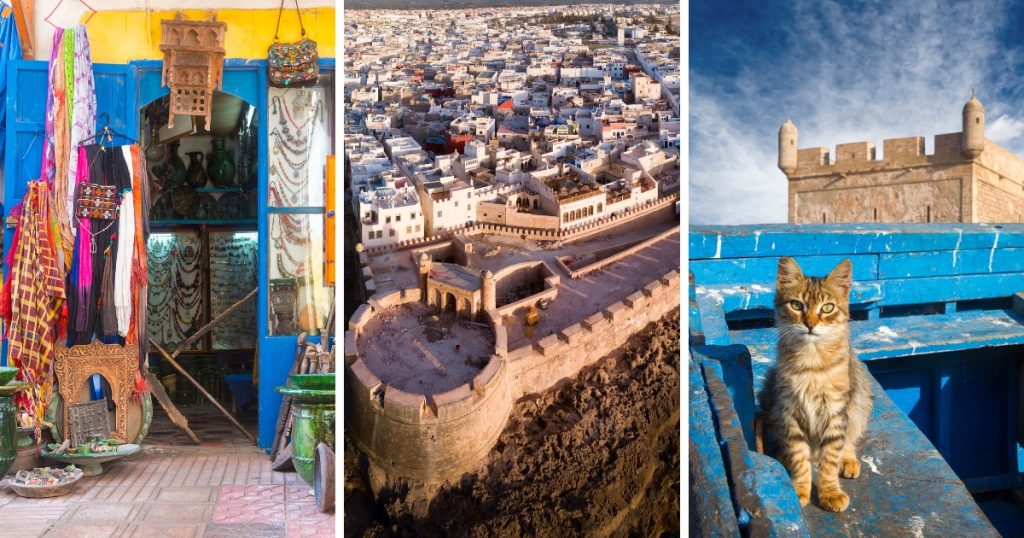
Start where the city’s magic lives: the medina itself. Whitewashed walls and vivid blue doors create one of Morocco’s most photogenic settings, and the layout is unusually navigable. The streets feel airy, the squares open up naturally, and you can wander without the stress of getting “trapped” in endless alleyways.
2) Skala de la Ville (Sea Ramparts)
The most iconic viewpoint in Essaouira. Cannon-lined walls stretch above crashing waves, offering panoramic Atlantic views that feel cinematic—especially at sunset when the sky turns amber and the ocean shifts to copper.
3) Skala du Port (Harbor Bastion)
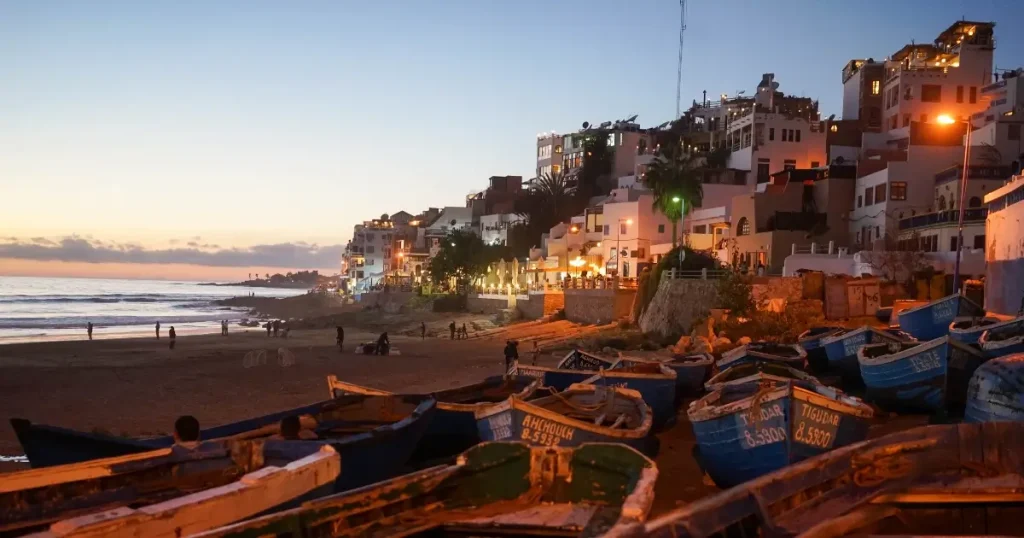
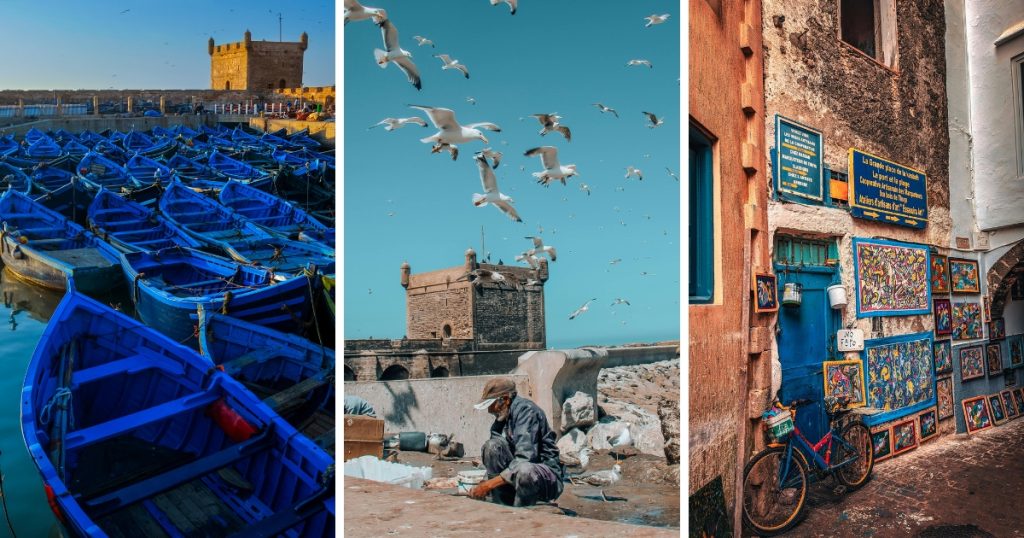
Down by the working port, you’ll see blue boats bobbing, fishermen mending nets, and daily life running on saltwater rhythms. It’s raw, real, and totally different from the polished tourist corners.
4) Place Moulay el Hassan
The city’s social center. Café terraces, musicians, vendors, and a steady flow of locals and travelers give this square its pulse. It’s perfect for people-watching with a coffee or fresh juice.
5) Île de Mogador (Offshore Island Reserve)
Visible from the shoreline, the island is protected and known for birdlife—including Eleonora’s falcons during parts of the year. You can’t freely explore it, but it adds mystery to the horizon.
6) Bayt Dakira Museum
A standout cultural visit that highlights Essaouira’s Jewish heritage and the city’s historical identity as a place of coexistence and exchange.
Best Things to Do in Essaouira
Essaouira is a rare destination where doing “less” often becomes the highlight. The secret is balancing calm exploration with a few unforgettable experiences.
Walk the Ramparts at Golden Hour
This is non-negotiable. The wind, the sea spray, the cannons, the light—everything feels like a film scene. Go slowly, stop often, and let the view do the work.
Spend a Beach Day (Even If You Don’t Swim)
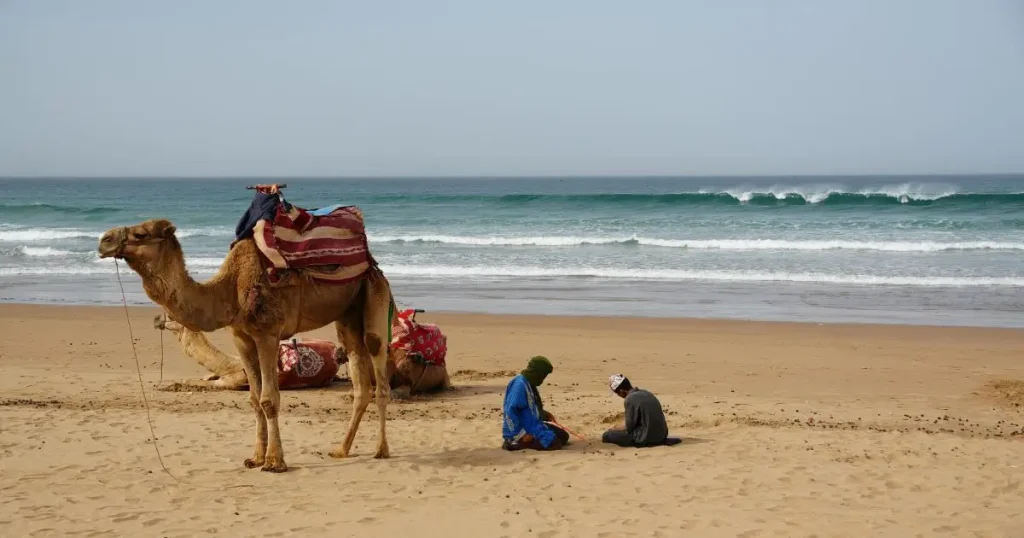
The beach stretches in a long golden curve south of the medina. It’s perfect for morning walks, horse rides, and sunset silhouettes. Swimming can be enjoyable, but the wind and currents mean it’s not always a classic “calm water” beach day.
Kitesurfing and Windsurfing
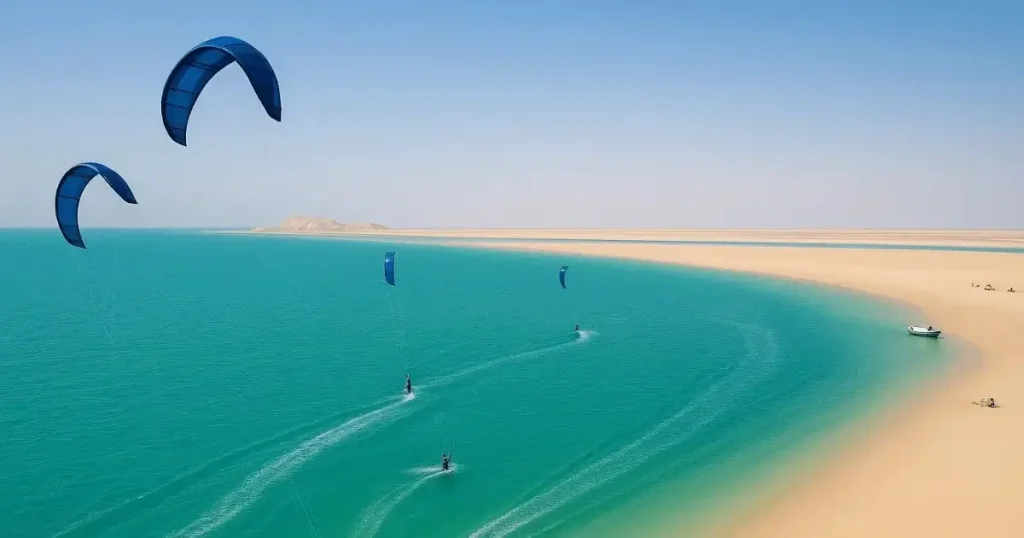
Essaouira’s signature winds make it one of Morocco’s best spots for wind sports. Beginners can take lessons right on the main beach, while more advanced riders can enjoy consistent conditions in peak months.
Surfing at Sidi Kaouki
For a surf-focused experience, head to Sidi Kaouki (about 25 km south). It often offers a more consistent, beginner-friendly vibe than the main beach during crowded seasons.
Try a Hammam
A hammam visit is one of the most authentic cultural experiences in Morocco. Tourist hammams offer comfort and guidance; public hammams offer a more local, immersive experience (and require a bit more cultural confidence).
Shop for Crafts Without Stress
Essaouira is famous for thuya woodwork—bowls, chess sets, inlay furniture—and the shopping experience is generally more relaxed than in bigger cities.
Traveler tip: If you plan to buy souvenirs in Morocco, many people prefer to do it in Essaouira. Prices can be fairer, and the vibe is calmer.
Local Culture and Authentic Experiences
Essaouira’s identity is shaped by centuries of connection to the world. As a port, it became Morocco’s doorway to trade, ideas, music, and multicultural communities. You can still feel those layers today—especially in the medina’s architecture, the old Mellah (Jewish quarter), and institutions like Bayt Dakira.
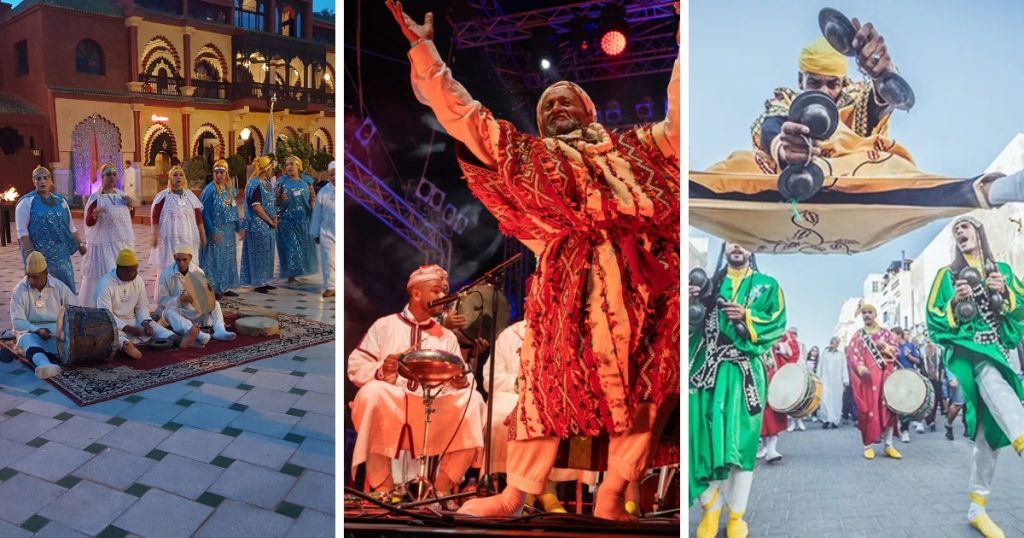
But the living heartbeat of Essaouira is Gnaoua music—a spiritual tradition rooted in sub-Saharan African rhythms, trance ceremonies, and deep ritual sounds. You’ll hear it on street corners, in riads, and sometimes drifting across rooftops at night like a distant pulse.
Every June, the city becomes even more electric during the Gnaoua and World Music Festival, when stages fill squares and ramparts and the atmosphere turns into a city-wide celebration.
Simple Cultural Etiquette
- Dress modestly in the medina (especially away from the beach).
- Ask before photographing people.
- During Ramadan, be discreet with eating/drinking in public spaces.
- A few words like “salam alaikum” and “shukran” go a long way.
Traditional Food and Culinary Experiences
If you love seafood, Essaouira will feel like a dream. The port’s daily catch means grilled fish can be unbelievably fresh—often caught the same morning.
Harbor Grills (A Must-Do Experience)
Along the harbor market, vendors grill shrimp, sardines, calamari, and sea bass to order. You pick your fish, choose sides like olives and harissa, and eat it hot with the smell of charcoal in the air.
Classic Moroccan Dishes Done Right
Beyond seafood, Essaouira serves the full Moroccan favorites:
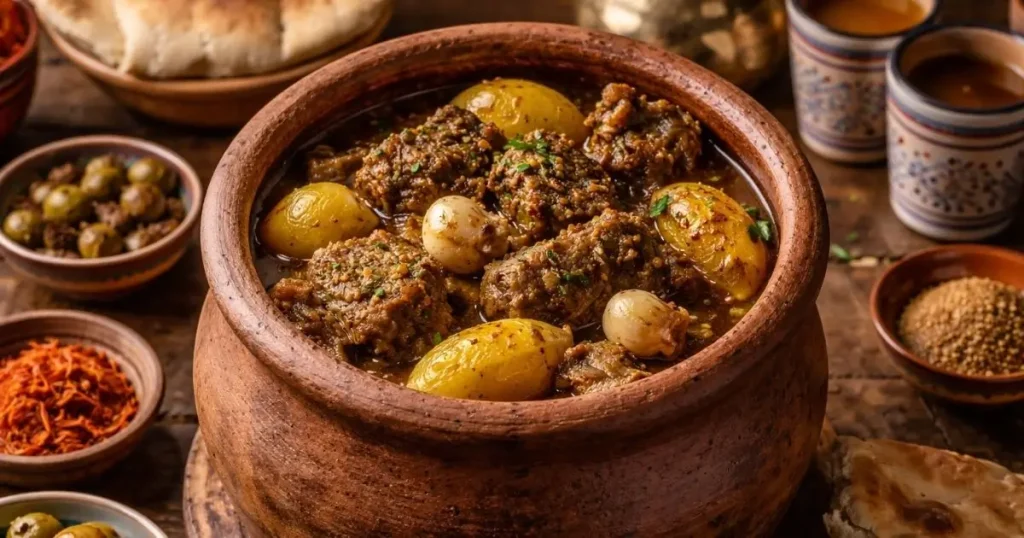
- Tagines (kefta with egg, chicken with preserved lemon, lamb with prunes)
- Couscous (traditionally Friday, but available throughout the week)
- Harira (warming lentil and tomato soup—especially comforting on breezy nights)
Argan Oil and Amlou
This region is the homeland of argan trees, and culinary argan oil shows up in the best way: amlou—a rich blend of argan oil, almonds, and honey, often spread on msemen for breakfast.
Good news for budgets: eating well in Essaouira doesn’t need to be expensive. Small medina restaurants can serve generous meals at very reasonable prices.
Best Time to Visit Essaouira
Essaouira is one of Morocco’s most “year-round” destinations. Atlantic air keeps it mild, even when inland cities get scorching hot.
Quick Season Breakdown
- Spring (Mar–May): warm, sunny, lower crowds — ideal
- Summer (Jun–Aug): comfortable temps, strong wind — perfect for kite/windsurf
- Autumn (Sep–Nov): warm, calmer, fewer tourists — ideal
- Winter (Dec–Feb): cooler, occasional rain, very quiet — best for peace + low prices
If you want the most balanced experience, aim for spring or autumn. If wind sports are your priority, summer is your season.
Travel Tips and Safety Information
Essaouira is widely considered one of the safest and most traveler-friendly Moroccan destinations—especially compared to higher-pressure cities.
Practical Tips
- Currency: Moroccan dirham (MAD). Cash is essential for markets and small cafés.
- ATMs: widely available. Cards work in many hotels and bigger restaurants.
- Water: tap water is treated, but many travelers stick to bottled water.
- Sun + wind: the breeze hides how strong the sun is—bring sunscreen and lip balm.
- Getting around: the medina is pedestrian-only. You’ll walk most places.
Taxi note: In Morocco, it’s smart to agree on the fare before you ride if a meter isn’t being used.
Nearby Destinations Worth Visiting
Marrakech (2.5–3 hours away)
A classic pairing: Marrakech for energy, Essaouira for calm. Many itineraries combine both to balance markets, gardens, and big-city intensity with coastal relaxation.
Sidi Kaouki (about 25 km south)
A laid-back surf village with a wild beach vibe—great for a day trip or overnight escape.
Agadir Region (about 2.5 hours)
More resort-style, modern, and built for beach tourism—very different mood from Essaouira’s historical charm.
Argan Oil Route
Travel inland and you’ll cross argan forests, cooperatives, and the famous sight of goats climbing argan trees.
Where to Stay in Essaouira
Most experienced travelers recommend one thing: stay inside the medina.
Riads (traditional courtyard homes) give you the full atmosphere—tilework, rooftops, and that unique feeling of waking up inside history. Many are affordable compared to similar riads in Marrakech, and staying inside the walls makes everything walkable.
- Luxury: high-end riads with hammams, rooftop dining, and full-service hospitality.
- Mid-range: the sweet spot for most travelers (breakfast included, great value).
- Budget: hostels and simple guesthouses, often social and traveler-friendly.
Book early for June festival dates and peak summer holidays.
How to Reach Essaouira
From Marrakech
The most common route. Travel time is about 2.5 to 3 hours.
- Supratours bus: affordable, comfortable, tourist-friendly
- Grand taxi: faster and flexible for groups (shared or private)
- Private transfer: door-to-door convenience for families or luggage-heavy trips
By Air
Essaouira has a small airport (Essaouira-Mogador) with some seasonal flights—especially from parts of Europe during summer.
Once you arrive, you’ll mostly explore on foot, and that’s exactly how Essaouira is meant to be experienced.
Essaouira Is Waiting
The best travel moments usually aren’t the ones you schedule—they’re the ones that happen between plans. A slow mint tea on a terrace while the wind moves the air. A sunset that turns the walls gold. A distant Gnaoua rhythm floating across rooftops. Essaouira is built for those moments.
Whether you’re coming for surf and sea, culture and craft, or simply a calmer side of Morocco, this coastal city offers something rare: a destination that feels magical without trying too hard.
Essaouira’s blue doors are already waiting to be opened.