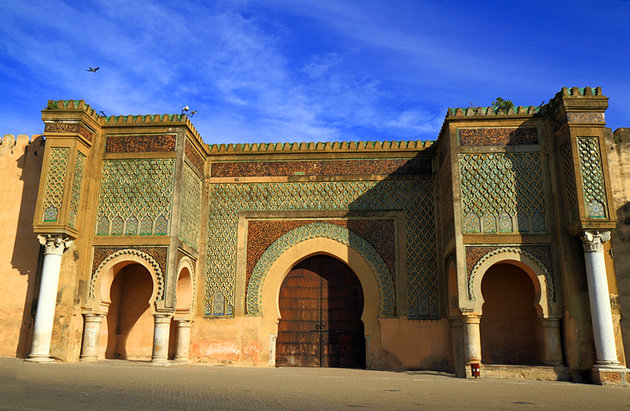
Of all the imperial cities in Morocco, Meknes keeps its secrets closest. It does not shout. It simply endures — and those who find it are never quite the same. There is a moment, somewhere between stepping through the immense gate of Bab Mansour and gazing across the vast stone plaza beyond, when the weight of centuries settles on your shoulders like a silk djellaba. You realise, quietly and completely, that travel to Meknes Morocco has taken you somewhere few tourists dare to linger — and in doing so, has handed you one of North Africa’s most extraordinary gifts. This is a city that does not perform for visitors. It simply is, unchanged and unhurried, a living monument to an age when Morocco shook the world.
Founded in the 10th century and reimagined in magnificent imperial splendour by Sultan Moulay Ismail in the 17th century, Meknes stands today as one of Morocco’s four royal cities — yet it remains the quietest, the most authentic, and arguably the most beautiful. While Marrakech dazzles with its rose-gold chaos and Fez bewilders with its labyrinthine medina, Meknes breathes at a different rhythm entirely. The souks here are navigable. The alleyways are genuinely old. The monuments are genuinely staggering. And the people have not yet grown tired of welcoming strangers.
This complete guide to travel in Meknes Morocco will take you through its grand gates, into its fragrant medina streets, past its crumbling Roman ruins, across its vineyard-laced countryside, and into the hearts of families who have called this magnificent plateau their home for generations. Whether you are a seasoned Morocco traveller or arriving in the Maghreb for the first time, Meknes will surprise you, move you, and quite possibly rearrange your list of favourite cities on earth.
Why Visit Meknes Morocco
The honest answer is that Meknes offers everything the great Moroccan cities offer — historic medinas, stunning Islamic architecture, vibrant souks, outstanding cuisine — but without the crushing tourist infrastructure that has reshaped much of Marrakech and Fez. There are no rooftop cafes bearing signs that shout at you to enter. There are no touts at every corner. There are simply beautiful streets, generous locals, and an atmosphere of lived-in authenticity that feels increasingly rare in a world where travel has been packaged and polished into something smooth and predictable.
Meknes was named a UNESCO World Heritage Site in 1996, recognising the extraordinary preservation of its medina, its imperial constructions, and its unique blend of Moroccan and European Baroque architecture. Sultan Moulay Ismail, whose reign from 1672 to 1727 coincided with the grand age of European palace building, was determined that his capital would rival Versailles itself. Enormous walls stretched for miles. Granaries capable of feeding an army rose from the earth. Stables of staggering scale housed twelve thousand horses. The result was a city of monumental ambition — and so much of it remains.
Beyond the history, Meknes sits at the centre of some of Morocco’s most rewarding countryside. It is the gateway to Volubilis, the finest Roman ruins on African soil. It is within easy reach of the sacred mountain town of Moulay Idriss Zerhoun. It commands the agricultural heartland of the Saiss Plain, where Morocco’s finest olives, grapes, and cereals grow under an immense blue sky. The city also sits conveniently between Fez and Rabat on the main train line, making it a natural — and deeply rewarding — stopping point on any Moroccan itinerary.
Meknes is Morocco without the noise. It is the kingdom’s best-kept secret, and the travellers who discover it count themselves among the fortunate.
Top Attractions in Meknes
Bab Mansour — The Gate of All Gates
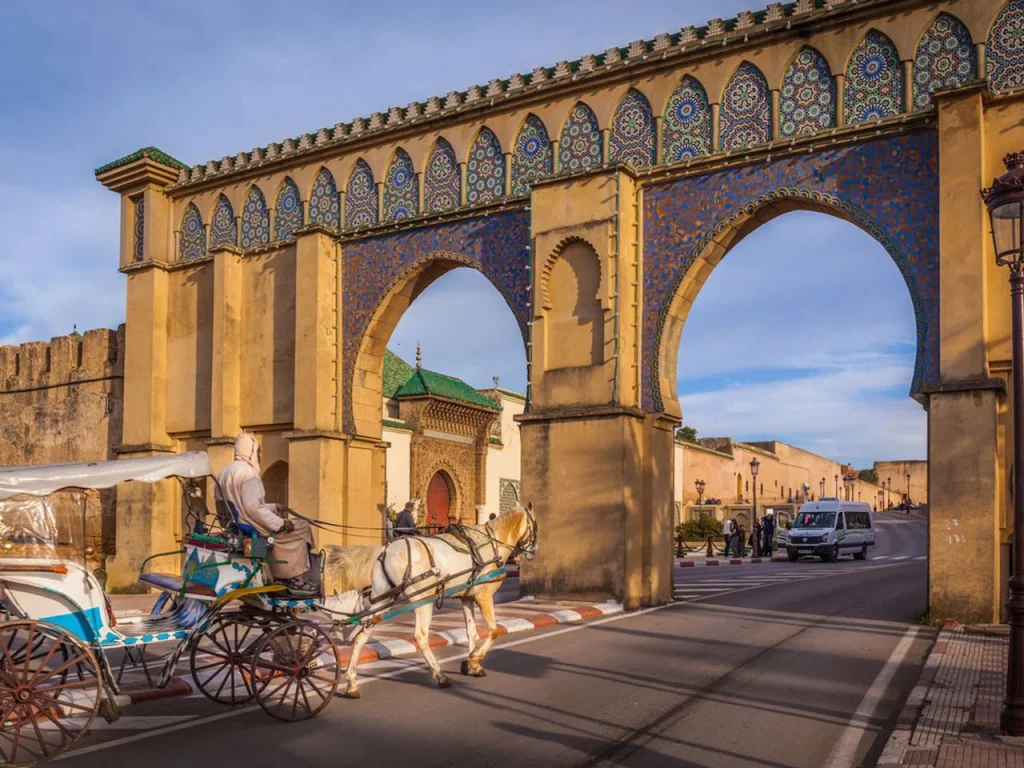
No image of Meknes is complete without Bab Mansour, the colossal ceremonial gateway that dominates Place el-Hedim. Completed in 1732, the gate is a masterwork of Moroccan decorative art — its surface alive with intricate zellij tilework, carved stucco, cedar panels, and powerful arched symmetry. Stand before it at dusk, when the stone glows amber and the swallows circle overhead, and you will understand why architects from across the Islamic world came to study it. The gate no longer serves as an entrance but as a portal through time. It is magnificent, unconditionally.
Place el-Hedim — The Heart of the Old City
The great public square of Place el-Hedim serves as Meknes’ equivalent of Marrakech’s Djemaa el-Fna — though considerably less theatrical. This broad, open plaza was created by Moulay Ismail by demolishing earlier structures, its name literally meaning ‘square of destruction.’ Today it pulses with evening life as families gather, street food vendors set out their stalls, and the light over Bab Mansour turns from gold to deep rose. It is the perfect place to absorb the city’s gentle rhythm before venturing deeper into the medina.
Mausoleum of Moulay Ismail
One of the most peaceful and profound sacred spaces in all of Morocco, the Mausoleum of Moulay Ismail is the final resting place of the sultan who built an empire. Unlike many sacred sites in Morocco, this mausoleum welcomes non-Muslim visitors — a gesture of openness that feels remarkably appropriate given the sultan’s own complex diplomatic history, which included correspondence with King Louis XIV. The interior is a tranquil sequence of tiled courtyards, murmuring fountains, intricate plasterwork, and a final chamber of extraordinary intimacy. Come early, come respectfully, and come ready to be moved.
Heri es-Souani — The Royal Granaries and Stables
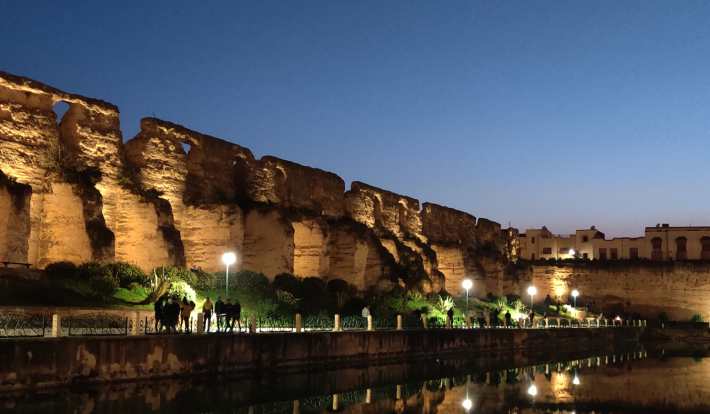
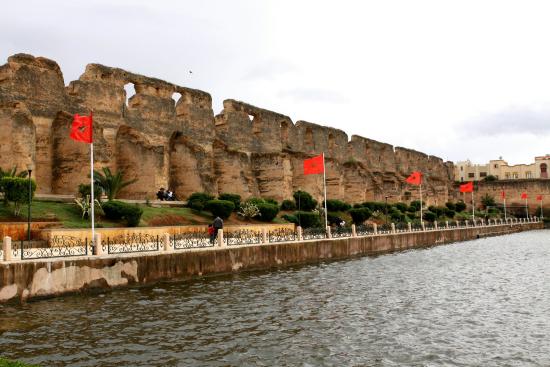
Among the most jaw-dropping structures anywhere in Morocco, the Heri es-Souani is the surviving portion of Sultan Moulay Ismail’s legendary granaries and stables complex. The scale is extraordinary — vast barrel-vaulted chambers, built with walls several metres thick to maintain cool temperatures, stretch in long rows across a wide site. Originally capable of storing grain for decades and stabling thousands of horses, the ruins today carry an almost cinematic grandeur. The nearby Agdal Basin — a vast ornamental reservoir built to irrigate the royal gardens — adds a serene counterpoint to the architectural drama.
The Medina of Meknes
The old walled medina of Meknes is a UNESCO World Heritage treasure and one of the most navigable historic quarters in Morocco. Unlike the medinas of Fez, it is possible to explore independently, with a general sense of direction and a willingness to occasionally wander down the wrong alley. The streets here are genuinely medieval — narrow, shaded, smelling of cedar and cumin and fresh bread. The souks are organised by trade in the traditional Moroccan manner: the carpenters in one lane, the dyers in another, the spice merchants filling the air with gold and rust and deep violet. Take your time. Get a little lost. It is the only proper way.
The Mellah — Jewish Quarter
The Mellah, or historic Jewish quarter of Meknes, is one of the oldest in Morocco, dating to the 15th century. Walking through its distinctive streets — characterised by overhanging upper floors that almost meet overhead, and carved wooden balconies — offers a window into the complex multi-cultural history of this extraordinary city. Several historic synagogues remain, some in various states of restoration, and the quarter maintains a quiet dignity that rewards thoughtful, unhurried exploration.
Best Things to Do in Meknes
Morning walks through the medina before the city fully wakes are among the great pleasures available to any visitor to Meknes. The light is cool, the air carries the scent of overnight jasmine, and the bakers are pulling the first round loaves from their ovens. Seek out the neighbourhood hammam for an authentic scrubbing ritual that has been part of Moroccan daily life for centuries — not a spa experience but a genuine community practice, warm and woolly and utterly restorative.
The weekly souk at the city’s edge operates on Sundays and is among the largest and most authentic rural markets in the region. Farmers arrive from the Saiss Plain and the surrounding hills with produce, livestock, and goods that rarely make it to the tourist-facing medina stalls. It is a spectacle of organised chaos and genuine commercial life, and wandering through it with no agenda beyond curiosity and a handful of dirhams in your pocket is one of the happiest ways to spend a morning.
Photography enthusiasts will find Meknes endlessly rewarding. The play of light through the arched corridors of the Heri es-Souani granaries at midday creates natural drama that professional photographers travel specifically to capture. Bab Mansour at the golden hour offers a subject that never grows tired. The medina rooftops at dawn, with the minarets rising through the morning mist, produce images of rare beauty. Unlike more heavily touristed cities, subjects here — a man carrying bread through a narrow lane, a carpet merchant arranging his wares, children playing football in a sunlit courtyard — often look back with simple curiosity rather than practiced performance.
A cycling excursion through the Saiss Plain is one of the best ways to understand why Meknes has been a settled, productive landscape since ancient times. The plateau is extraordinarily fertile, and the roads that wind between olive groves and vineyard rows provide gentle terrain ideal for a half-day pedal. Local tour operators in the city can organise bike hire and route maps, and several farms along the way welcome visitors who arrive with genuine interest in Morocco’s agricultural traditions.
Unique Cultural Experiences in Meknes
Morocco’s cities are distinguished not only by their architecture and history but by the living cultural practices that fill them with meaning every single day. Meknes, less altered by mass tourism than its imperial siblings, offers some of the country’s most genuine cultural encounters.
The Festival of Meknes — formally the Meknes International Animated Film Festival — takes place in autumn and draws creative talent from across the Arabic-speaking world and beyond. The city’s public spaces transform for the occasion, and the atmosphere of artistic energy that descends on the medina during festival days is electric. But Meknes also hosts smaller, less-promoted cultural events throughout the year: Quranic recitation competitions, traditional music evenings in neighbourhood cafes, and the extraordinary annual moussem of Moulay Idriss Zerhoun — a religious festival held at the nearby holy town that draws pilgrims from across northern Morocco in a spectacle of devotion, colour, and traditional horsemanship.
Moroccan calligraphy is an art form of extraordinary sophistication, and several masters in the Meknes medina are willing to welcome interested visitors into their workshops. Watching a calligrapher prepare his reed pen, mix his ink, and then render Arabic script in flowing, confident strokes is a meditation on craft and patience. Many will offer lessons, and taking even a short introduction to the basics of Arabic script leaves visitors with a new appreciation for an aesthetic tradition that stretches back more than a thousand years.
The craft of zellij tilework — the cut ceramic mosaic seen on every significant building in Meknes — is still practiced by traditional artisans in workshops near the medina. The process is painstaking: individual ceramic pieces are cut by hand with a small hammer and chisel, then assembled face-down into precise geometric patterns before being grouted and set. Many workshops welcome visitors, and the sound of cutting hammers echoing through the narrow lanes has been the city’s percussion section for centuries.
In Meknes, culture is not something staged for visitors. It is simply what happens when a community remains connected to its own magnificent inheritance.
Food and Traditional Cuisine in Meknes
The food of Meknes is the food of a royal city — generous, complex, deeply aromatic, and grounded in centuries of culinary tradition that draws on Berber, Arab, Andalusian, and Mediterranean influences in measures that no recipe can quite account for. Eating well in Meknes requires almost no effort: even the most modest neighbourhood restaurant will place before you dishes that a London or Paris chef would struggle to reproduce.
Pastilla — the extraordinary sweet-savoury pie of pigeon or chicken, almonds, eggs, and spiced puff pastry dusted with cinnamon and icing sugar — is considered to reach its finest expression in Meknes, and the claim is not without merit. The dish carries the fingerprints of Andalusian cuisine brought to Morocco by Muslims expelled from Spain in the 15th and 16th centuries, and in Meknes, where Andalusian cultural influences remain strong, it is prepared with an attention to layering and seasoning that feels like art.
Mechoui — whole lamb slow-roasted in an underground clay oven until the meat falls away with the gentlest pull — is the centrepiece of any significant celebration in the Meknes region. Several restaurants in and around the medina offer mechoui by advance order, and sharing this dish at a low table with Moroccan bread and a spread of salads is one of the finest possible expressions of Moroccan hospitality. The region’s lamb is particularly prized because the animals graze on the herb-rich pastures of the Saiss Plain, and the flavour of the meat reflects this.
The wines of Meknes deserve their own paragraph, because they are among the most underrated in the world. The vineyards surrounding the city have been producing wine since Roman times — the ruins at Volubilis preserve the olive presses and trading rooms of a city that exported extensively to Rome — and the modern Moroccan wine industry, centred largely on the Meknes region, produces bottles of genuine quality. Labels including Medaillon, Cuvee du President, and the highly regarded Guerrouane are worth seeking out, and the Domaine de la Zouina and Domaine Ouled Thaleb welcome visits from wine enthusiasts.
Street food in Meknes follows the rich Moroccan tradition with particular dedication. The merguez sandwiches available at small grills around Place el-Hedim — spiced lamb sausages in a crusty roll with harissa and cumin — are addictive. Freshly fried sardines with preserved lemon. Bowls of harira soup, earthy with lentils and chickpeas and tomato, offered from mid-afternoon as the fast-breaking tradition demands. Brochettes of spiced minced lamb over charcoal, served with flatbread and a heap of fresh herbs. These are the flavours of Meknes, and they cost almost nothing.
Best Time to Visit Meknes Morocco
Meknes sits on a high plateau approximately 540 metres above sea level, which gives it a climate notably more temperate than coastal Moroccan cities. Summers are warm but not oppressive — daytime temperatures in July and August typically hover around 32 to 36 degrees Celsius, rarely reaching the scorching peaks of Marrakech or Fez. Winters are cool, occasionally cold, and can bring rain and even frost. The result is a destination that genuinely rewards travel across an extended season.
Spring — specifically March through May — is widely considered the finest time to travel to Meknes Morocco. The air is mild and clear, the surrounding countryside is green and flowering, the light is extraordinary, and the tourist crowds remain minimal. Temperatures sit comfortably between 18 and 26 degrees, perfect for walking the medina for hours or cycling the Saiss Plain. The wildflowers on the hillsides around Moulay Idriss are at their peak, and the Roman ruins at Volubilis seem to glow from within.
Autumn — September through November — runs the spring a close second. The harvest season brings additional colour to the markets, the vineyards turn gold and russet, and the first autumn rains freshen the air after summer. October is a particularly lovely month, combining warm days with cooler evenings ideal for sitting in the medina with a glass of mint tea.
Ramadan, when the dates align in the right season, offers a unique cultural experience that transforms the city after sunset. The streets come alive after dark in ways that daylight hours do not capture, and the community spirit of the breaking fast — iftar — is something any visitor fortunate enough to be invited to share will remember for a lifetime. That said, some restaurants operate reduced hours during Ramadan, and visitors should plan food and touring schedules with some flexibility.
Best Time: March–May and September–November for ideal weather, fewer crowds, and the most rewarding conditions for sightseeing and outdoor activities.
Travel Tips and Safety Advice for Meknes
Meknes is one of the safest cities in Morocco for independent travellers, with a relatively low rate of tourist-directed hassle compared to Fez or Marrakech. The city’s modest tourist infrastructure means that most interactions with locals carry genuine warmth rather than commercial intent. That said, basic awareness and cultural sensitivity will enrich your experience considerably.
Dress Code: Respect local sensibilities, particularly when visiting sacred sites. Both men and women should cover shoulders and knees in the medina and religious areas. Women travelling alone will generally find Meknes relaxed, though covering hair when entering mosques or mausoleums is advisable and respectful.
Currency: The Moroccan Dirham (MAD) is the local currency and cannot be freely traded internationally. Change money at official bureaux de change or use ATMs in the city centre. Keep small denomination notes handy for medina shopping and food stalls.
Language: Arabic and Tamazight (Berber) are the official languages, with Moroccan Darija spoken daily. French is widely used in business and tourism. Basic French will open many doors. A few words of Arabic — Shukran (thank you), La Bes (I’m fine) — will earn you genuine warmth.
Bargaining: Negotiation is expected in the medina souks. A starting price is rarely the final price. Approach haggling with good humour and patience, and remember that small amounts of money mean very different things to both sides of a transaction. Never start a negotiation you are unwilling to complete.
Transport: Petit taxis — small, metered urban taxis — are cheap, plentiful, and the best way to navigate between the medina and the new city. Agree on using the meter before departure or negotiate a price. Grand taxis serve inter-city routes and the trip to Volubilis.
Health: Tap water in Meknes is treated but many travellers prefer bottled water to avoid stomach adjustment issues. Street food is generally safe, particularly cooked items served piping hot. Carry a basic first aid kit and any prescription medications you require.
Where to Stay in Meknes
Accommodation in Meknes ranges from beautifully restored traditional riads deep within the medina to comfortable modern hotels in the Ville Nouvelle (new city). The experience of sleeping inside a riad — a courtyard house with rooms arranged around a central garden or fountain — is deeply recommended for any visitor wishing to live inside Moroccan architectural tradition rather than simply observe it from outside.
Riad Yacout is widely considered the finest traditional accommodation in Meknes, housed in a meticulously restored 18th-century palace with nine suites, exceptional tilework, and some of the best home-style Moroccan cooking available in the city. The staff know the city intimately and can arrange everything from day trips to Volubilis to private cooking lessons with the family chef. For those seeking a more intimate and independent experience, smaller guesthouses within the medina — some with only three or four rooms — offer extraordinary value and genuine immersion in medina life.
In the Ville Nouvelle, international-standard hotels including the Barcelo and several well-maintained three-star properties offer convenient bases with all modern amenities. This part of the city, laid out during the French Protectorate period in the early 20th century, has wide boulevards, good restaurants, and a very different but equally interesting character from the medina. Budget travellers will find hostel accommodation available and generally of decent quality, particularly near the train station.
Booking Advice: Book accommodation at least four to six weeks in advance for spring and autumn travel. Riad properties in the medina are limited and fill quickly during Morocco’s peak tourism seasons.
How to Get to Meknes Morocco
Meknes is excellently connected to the rest of Morocco and is often described as one of the easiest imperial cities to reach. The city sits directly on the main ONCF railway line connecting Casablanca and Rabat on the Atlantic coast with Fez in the east, making it a natural stopping point on any traverse of northern Morocco.
By train from Casablanca’s Casa-Port or Casa-Voyageurs stations, the journey to Meknes takes approximately three and a half to four hours. From Fez, the train ride is a comfortable 45 minutes. From Rabat, allow approximately two and a half hours. Morocco’s national railway ONCF operates a reliable, comfortable service and first-class tickets are very reasonably priced by international standards. The Meknes train station sits conveniently close to both the Ville Nouvelle centre and major taxi routes to the medina.
The nearest international airport is Fez-Saiss Airport (FEZ), approximately 60 kilometres east of Meknes. From the airport, the most convenient transfer option is either a grand taxi directly to Meknes or a combination of bus and train. Several European carriers including Ryanair and easyJet operate routes into Fez from various European hubs, making Meknes very accessible for European visitors. Casablanca’s Mohammed V International Airport (CMN), the largest in Morocco, is serviced by a far wider range of international airlines and connects to Meknes via train in approximately four hours.
Bus services operated by CTM and Supratours connect Meknes with most major Moroccan cities at competitive prices, though journey times are generally longer than by train. Driving to Meknes via Morocco’s well-maintained toll motorway network offers flexibility for those wishing to explore the surrounding region at their own pace. The A2 autoroute between Casablanca and Fez passes close to Meknes, and the drive from Casablanca takes approximately three hours under normal traffic conditions.
Nearby Destinations Worth Visiting from Meknes
Volubilis — Rome’s African City
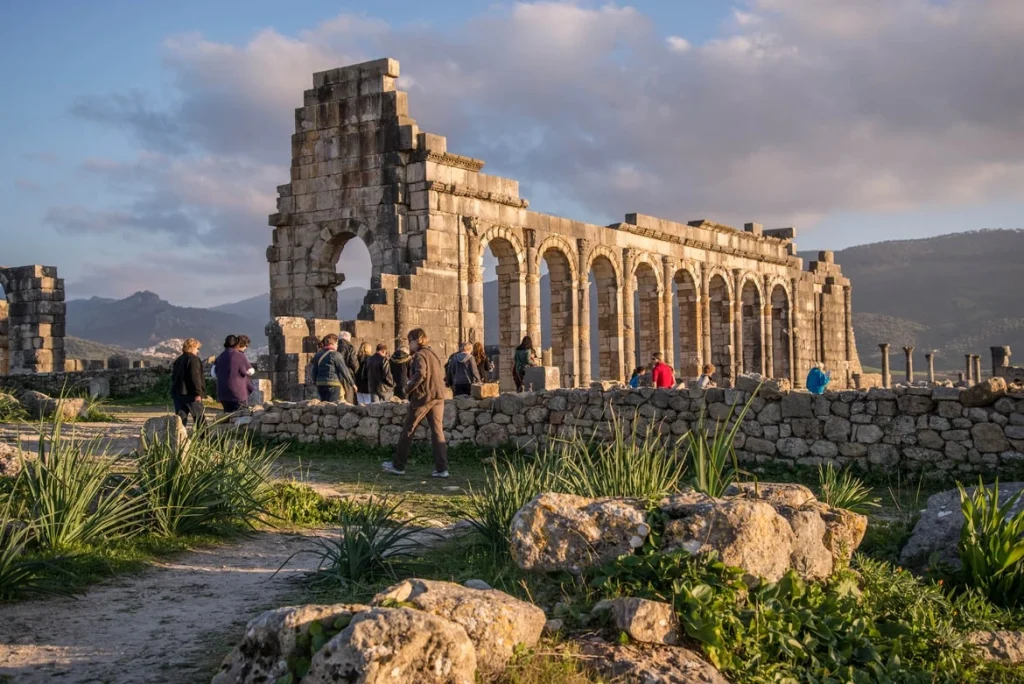
Approximately 30 kilometres north of Meknes, the Roman ruins of Volubilis represent one of the most significant and breathtaking archaeological sites in Africa. A UNESCO World Heritage Site since 1997, Volubilis was an important outpost of the Roman Empire, serving as the capital of the Roman province of Mauretania Tingitana. Today its extraordinary preserved mosaics — still vivid after two thousand years, depicting Dionysian processions, hunting scenes, and mythological figures — the triumphal arch of Caracalla, the Forum, the Capitoline temple, and the elegant residences of Roman merchants create a site of genuine world-class significance. Arrive early morning for the best light and the greatest quiet. A local guide adds enormously to the experience.
Moulay Idriss Zerhoun — The Holy City
Perched dramatically on twin hills above a valley of olive groves just a few kilometres beyond Volubilis, Moulay Idriss Zerhoun is Morocco’s holiest city — the resting place of Moulay Idriss I, the founder of the first Arab dynasty of Morocco and a descendant of the Prophet Muhammad. Until 2005, non-Muslims were not permitted to spend the night in the town. Today visitors are welcome, and a night here in one of the small guesthouses that have opened in recent years provides one of the most unexpectedly moving experiences available in northern Morocco. The panoramic views over the valley at sunset are unforgettable.
Fez — The Intellectual Capital
Just 60 kilometres east of Meknes, Fez deserves at least two days of serious attention and rewards considerably more. The medina of Fez el-Bali is the largest car-free urban area in the world, a bewildering and magnificent UNESCO Heritage city of 9,000 lanes, 300 mosques, the medieval University of Al Quaraouiyine, and a sensory intensity that has driven visitors to the edge of ecstasy and despair in equal measure. The famous Chouara tannery — where leather has been coloured in stone vats using the same technique for nine centuries — is among the most visually arresting sights in all of Morocco. Travel between Meknes and Fez easily by train.
Ifrane — Morocco’s Little Switzerland
An hour’s drive south of Meknes through the cedar forests of the Middle Atlas, the mountain resort town of Ifrane will surprise almost every visitor expecting North African austerity. Built during the French Protectorate in alpine chalet style, Ifrane sits at 1,665 metres altitude and receives genuine snowfall in winter. The cedar forests surrounding the town are home to Barbary macaques — among the most photogenic wildlife encounters in Morocco — and the cool mountain air after the heat of the plains is deeply refreshing.
Sample 3-Day Travel Itinerary for Meknes Morocco
Day One — The Imperial City
Begin your first morning with breakfast at a medina cafe near Place el-Hedim — mint tea, msemen flatbread with amlou (almond-argan-honey paste), and fresh-squeezed orange juice. Make your way to Bab Mansour before the day’s warmth arrives and spend an hour absorbing its scale and detail. Cross into the imperial precinct, visiting the Mausoleum of Moulay Ismail with calm, respectful attention. Continue to the extraordinary Heri es-Souani granaries and stables, where an hour passes as minutes. In the afternoon, surrender entirely to the medina: enter near the copper souk, navigate by the sound of hammers toward the spice merchants, find a stall of fresh herbs and dried flowers, buy something beautiful and unnecessary. End the day at Place el-Hedim as the sun drops behind Bab Mansour.
Day Two — Volubilis and Moulay Idriss
Rise early for a grand taxi or organised day trip to Volubilis, arriving at the site as it opens to catch the morning light on the mosaics. Spend two to three hours among the ruins with a local guide whose knowledge will transform what you see. Continue to Moulay Idriss Zerhoun for lunch at a small rooftop restaurant with views over the valley — grilled kefta, fresh salads, and khobz bread. Explore the winding lanes of the holy city in the afternoon, visiting the cylindrical minaret unique to this location. Return to Meknes for a relaxed dinner at a traditional restaurant in the medina — order the pastilla.
Day Three — Crafts, Cuisine, and Countryside
Devote the morning to craft culture: arrange in advance to visit a zellij workshop and a copper artisan’s atelier in the medina. Watch masters at work and understand the patience that each surface of beauty in this city required. Midday brings the Sunday souk if your dates align, or a cycling excursion into the Saiss Plain for a different kind of beauty — the open agricultural landscape that has fed Meknes for three thousand years. The afternoon can include a visit to the Mellah and the Dar Jamaï Museum, housed in a 19th-century palace and displaying some of the finest Moroccan decorative arts outside Marrakech. A final dinner at a rooftop restaurant with views over the medina and a glass of local Guerrouane wine provides a fitting close to three days in Morocco’s most rewarding secret city.
Frequently Asked Questions About Travel to Meknes Morocco
Is Meknes worth visiting compared to Fez and Marrakech?
Absolutely — and many experienced Morocco travellers argue it is superior for precisely the reasons that make it less famous. Meknes offers the same quality of imperial architecture, medina authenticity, and cultural richness as Fez and Marrakech but without the density of tourist infrastructure that has transformed those cities. If you value genuine encounters, navigable old quarters, and an atmosphere that feels lived-in rather than staged, Meknes may become your favourite Moroccan city.
How many days should I spend in Meknes Morocco?
Two to three full days is the minimum to experience the city’s highlights properly. A first day covers the imperial monuments and medina. A second day makes the essential excursion to Volubilis and Moulay Idriss. A third day allows for deeper exploration of the craft workshops, souk, and surrounding countryside. Travellers with more time will find a fourth and fifth day reward them richly — the city reveals itself slowly and generously.
Is it safe to travel to Meknes as a solo female traveller?
Meknes is one of the more relaxed Moroccan cities for solo female travellers. The level of street harassment is notably lower than in Marrakech or Fez. Dressing modestly — covering shoulders and knees — and adopting a purposeful walking style are the standard practical measures. The city’s relatively modest tourist footprint means most interactions carry genuine curiosity rather than commercial intent. Many solo female travellers report Meknes as among the most comfortable cities they experienced in Morocco.
What is the best way to travel from Meknes to Volubilis?
The most convenient option is a grand taxi from the taxi stand near Meknes train station — negotiate a fare that includes waiting time at Volubilis while you explore. Many visitors combine Volubilis with Moulay Idriss in a single day trip, which is well worth arranging. Alternatively, several guesthouses and the Meknes tourism office can arrange organised excursions with English-speaking guides, which significantly deepens the experience at the archaeological site.
What is Meknes famous for in Moroccan cuisine?
Meknes is particularly celebrated for pastilla (the sweet-savoury layered pie), mechoui (whole roasted lamb), and the finest olive oil in Morocco, produced from centuries-old groves in the surrounding Saiss Plain. The city is also the heart of Morocco’s wine industry, with several estates producing internationally recognised wines. Street food — merguez sandwiches, harira soup, fresh-grilled brochettes — is excellent and very affordable throughout the medina.
Do I need a guide to explore the Meknes medina?
Unlike Fez, where a guide is practically essential to navigate without getting genuinely disoriented, the Meknes medina is manageable for independent exploration. A basic map, a sense of direction, and willingness to occasionally ask for help from locals (who are unfailingly helpful) is generally sufficient. That said, hiring a licensed local guide for half a day adds remarkable depth to your understanding of the history, architecture, and craft traditions you encounter — it is money very well spent.
What currency should I bring to Meknes and how do I access money?
Morocco’s currency is the Dirham (MAD), and it is a closed currency — you cannot buy it before arriving in Morocco. Currency exchange is available at the airport, in official bureaux de change throughout the Ville Nouvelle, and at major banks. ATMs are readily available in the city centre. Credit cards are accepted at larger hotels and some restaurants but cash remains essential for medina shopping, taxis, and street food. Always carry small-denomination notes.
What should I absolutely not miss during travel to Meknes Morocco?
The list is short but non-negotiable: Bab Mansour at golden hour, the Mausoleum of Moulay Ismail, the Heri es-Souani granaries, a morning lost in the medina souks, the ruins of Volubilis with a knowledgeable guide, dinner featuring pastilla in a traditional riad restaurant, and a quiet hour at Place el-Hedim watching the city’s evening life unfold. These experiences together form a portrait of one of the Islamic world’s most extraordinary cities — and they are available to any traveller willing to step off the beaten path.
Travel to Meknes Morocco — because the world’s most beautiful cities are not always the loudest ones.